Best 40 Amp EV Chargers
Short answer
The best 40 amp EV charger is the Grizzl-E Classic at around $299.99, which delivers 9.6 kW on a 50 amp circuit. A 40 amp charger needs a 50 amp breaker under the 125 percent continuous load rule, and 9.6 kW is the maximum any plug-in unit on a NEMA 14-50 can deliver.
The best 40 amp EV charger is the Grizzl-E Classic 40A at around $299.99. It delivers 9.6 kW on a 50 amp circuit from a sealed metal case, carries a UL certification, and has no app, no account and no cloud service to be discontinued in four years. If you want connectivity, the Autel MaxiCharger 40A at around $375.99 adds Wi-Fi, Bluetooth and a 25 foot cable.
Forty amps is the most common home charging installation in the country, and it earns that position on economics rather than on speed. It is the largest output a plug-in charger can deliver, it fits the NEMA 14-50 receptacle that supply houses stock and that RV owners already have, it runs on 6 AWG copper on a normal run, and a 50 amp breaker sits comfortably on most 200 amp panels and on a surprising number of 100 amp ones. It is the cheapest wiring job that nobody would call slow.
Top pick, 40 amp charger
Best 40 amp chargerGrizzl-E
Grizzl-E Classic 40A
$299.99
A 40 amp unit in a sealed metal case UL certified, rated for indoor or outdoor mounting, and with no app, no account and no cloud service that can be discontinued in four years. On a 50 amp circuit it delivers 9.6 kW, which is the most common home charging speed in the country.
- Output
- 9.6 kW
- Continuous
- 40 A
- Circuit
- 50 A
- Case
- Metal
- Mounting
- Indoor or outdoor
- Connector
- J1772
Paid link. Price shown when researched.
Why do most people end up at 40 amps?
Because the ladder either side of it costs more than it returns. The step down to 32 amps saves a conductor size and some panel load but gives up 1.9 kW. The step up to 48 amps gains 1.9 kW but requires a 60 amp breaker, a hardwired termination and often a heavier conductor once run length is accounted for. Forty amps sits at the point where the marginal cost per kilowatt is lowest.
| Charger output | Breaker | Power at 240 V | Typical copper | Connection | Notes |
|---|---|---|---|---|---|
| 32 A | 40 A | 7.7 kW | 8 AWG | Plug-in or hardwired | Plenty for a car with a 6.6 or 7.2 kW onboard charger. |
| 40 A | 50 A | 9.6 kW | 6 AWG | Plug-in or hardwired | The most common home install. Fits a NEMA 14-50 outlet. |
| 48 A | 60 A | 11.5 kW | 6 AWG | Hardwired only | Hardwired only. Saturates almost every onboard charger sold. |
Notice that 40 and 48 amps share a conductor size on a short run. That is the strongest argument for wiring 60 amps even while buying a 40 amp charger, because the copper is often identical and the breaker is the difference. It is not an argument that survives a long run, where voltage drop rather than ampacity picks the conductor and the two cases diverge.
In miles rather than kilowatts, 9.6 kW recovers roughly 30 to 35 miles of range per hour on an average crossover, closer to 40 on an efficient sedan and closer to 21 on a large electric truck. Over a nine hour overnight window that is 190 to 360 miles. There is no daily commute in normal life that a 40 amp circuit fails to refill overnight, which is the practical reason this output dominates.
Who should step down to 32 amps?
Two groups, and both save real money by doing it. The first is anyone whose car caps at 6.6 or 7.2 kW, which includes the Nissan Leaf and early Toyota bZ4X. Those cars physically cannot draw more than a 32 amp charger offers, so a 40 amp circuit is a slightly more expensive way to get identical charging.
The second is anyone whose panel is tight. A 32 amp charger runs on a 40 amp breaker with 8 AWG copper rather than a 50 amp breaker with 6 AWG, which is lighter on the service, cheaper in conductor and sometimes the difference between fitting the project into an existing panel and paying for a service upgrade. Run the panel load calculator before assuming you need 40, because the saving here can be thousands rather than tens.
Who should step up to 48 amps?
Anyone with a large pack, an inefficient vehicle and a genuine need to recover a lot of range overnight. A Rivian R1T at 135 kWh and 2.2 miles per kilowatt hour, or a Cybertruck at 123 kWh and 2.4, takes a long time to refill from a low state of charge, and there 1.9 extra kilowatts compounds across a nine hour session into something worth having.
The second case is timing rather than capacity: if the electrician is already in the garage with the panel open and the run is short, the incremental cost of a 60 amp circuit over a 50 amp one is small compared with the cost of doing the work twice. The whole argument, with numbers, is in 32A vs 40A vs 48A, and the shortlist is in the 48 amp roundup.
Starter: 9.6 kW for under 260 dollars
Every unit in this tier delivers the full 9.6 kW, so nothing here is slow. What you give up is enclosure quality, brand depth and in two of three cases the app. For a sheltered garage wall and a car that schedules its own charging, that is a very defensible set of things to give up.
Starter tier: $170 to $250
Certified 40 amp hardware at the bottom of the market. Two have 25 foot cables, which is unusual at this price.

BETUMODA
BETUMODA Level 2 EV Charger, 40A with 25 ft Cable
$169.99
The cheapest genuine 9.6 kW unit here, with a 25 foot cable and an LED display showing session energy. It is a plug-in unit and delivers exactly the same power as units at twice the price.
- Output
- 9.6 kW
- Circuit
- 50 A
- Cable
- 25 ft
- Display
- LED
Trade-off A newer brand with fewer owner reviews, so long-term support is an unknown.
Check price
ELEGRP
ELEGRP 40A NEMA 14-50 Portable
$209.99
ETL certified, 40 amps, 25 foot cable, NEMA 14-50 cord cap. A straightforward portable unit from a brand that mostly makes wiring devices, which is a reassuring background for this product.
- Output
- 9.6 kW
- Circuit
- 50 A
- Cable
- 25 ft
- Cert
- ETL
Trade-off No app, so scheduling and energy reporting have to come from the car or the panel.
Check priceGrizzl-E
Grizzl-E Smart 40A
$250.00
The connected version of the Grizzl-E in the same metal case, Energy Star listed and UL tested, at a price that undercuts most dumb units. The best combination of enclosure and price on this page.
- Output
- 9.6 kW
- Circuit
- 50 A
- Case
- Metal
- Smart
- Yes
Trade-off The app is functional rather than polished. Buy it for the case, not the software.
Check pricePaid links. Prices shown when researched and change without notice.
The Grizzl-E Smart is the standout on price for what you get, because it puts a metal case and an Energy Star listing at the top of the budget tier rather than the bottom of the middle one. The app is functional rather than polished, so the right way to buy it is as a rugged charger that happens to be connected.
The BETUMODA 40A is the cheapest way to 9.6 kW on this page. Treat certification as the line you never cross and brand depth as the thing you are trading away: fewer owner reviews to read and a warranty process nobody can vouch for. On a 240 volt appliance that is a real trade, not a free one.
Buy once: enclosure, cable and radio
Buy-once tier: $300 to $376
The same 9.6 kW with hardware built to last a decade on a garage wall. The differences are the case, the cable and whether it connects.
Grizzl-E
Grizzl-E Classic 40A
$299.99
The pick. Sealed metal case, 40 amps, deliberately no connectivity, and the enclosure that survives a detached garage or an exterior wall better than anything else at the price.
- Output
- 9.6 kW
- Circuit
- 50 A
- Case
- Metal
- Mounting
- Indoor or outdoor
Trade-off No energy reporting at all, so verifying a time-of-use bill needs a separate monitor.
Check price
Autel
Autel MaxiCharger 40A
$375.99
A 40 amp station with a 25 foot cable that stays flexible in the cold, in an enclosure rated for indoor or outdoor mounting rather than a sheltered wall only.
- Output
- 9.6 kW
- Circuit
- 50 A
- Cable
- 25 ft
- Mount
- Indoor or outdoor
Trade-off A moulded enclosure, so it prefers a sheltered mounting position to an exposed wall.
Check price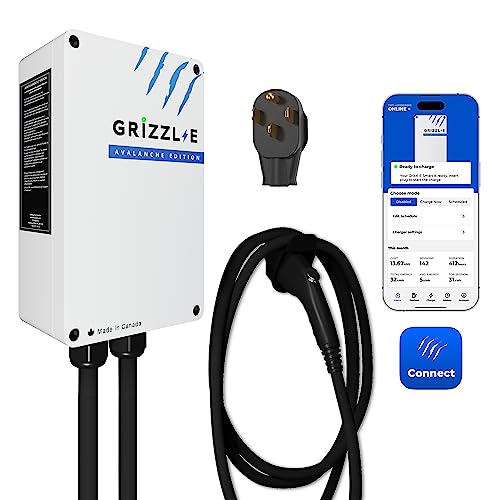
Grizzl-E
Grizzl-E Classic Connect 40A
$349.99
The Grizzl-E metal case with proper connectivity and energy reporting added, which is the combination people ask for when they want an outdoor-tough unit that can still prove what it used.
- Output
- 9.6 kW
- Circuit
- 50 A
- Case
- Metal
- Smart
- Wi-Fi
Trade-off Fifty dollars over the Classic for software you may not need if the car schedules itself.
Check pricePaid links. Prices shown when researched and change without notice.
The Grizzl-E Classic is the site's pick in this class for one reason that has nothing to do with charging: it will still be working in twelve years. A sealed metal enclosure with no network stack has almost nothing in it to fail, no firmware to go stale and no cloud service whose retirement bricks a feature. On an exterior wall or in a detached garage that matters more than any app.
If you want that toughness with reporting, the Grizzl-E Classic Connect is the same case with connectivity added. The question worth asking before you pay the difference is what you will do with the data. If you are on a time-of-use plan and want to verify the bill, it earns its keep. If your car already schedules charging and you never look at an app, it does not.
Ceiling: compact, dual output and dual voltage
Ceiling tier: $230 to $900
None of these is faster. Each solves a constraint: a cramped wall, two electric cars on one circuit, or a charger that has to work in two places.

Wallbox
Wallbox Pulsar Plus 40A
$649.99
A very compact 40 amp unit for a mounting position that genuinely will not take a larger enclosure, between a door frame and a window or beside a panel in a utility cupboard.
- Output
- 9.6 kW
- Circuit
- 50 A
- Connector
- J1772
- Size
- Compact
Trade-off The most expensive way to buy 9.6 kW, and the compact design shortens the cable.
Check priceGrizzl-E
Grizzl-E Duo Connect, Dual 40A
$899.99
Two 40 amp outputs sharing one circuit intelligently, which is the honest answer for a two-EV household with a single spare pair of breaker spaces. Both cars plug in and the unit divides supply.
- Outputs
- Two
- Per output
- 9.6 kW
- Shared
- Yes
- Case
- Metal
Trade-off When both cars draw at once each gets roughly half, so plan around the slower night.
Check price
WOLFBOX
WOLFBOX Portable Level 1 and 2, 40A
$229.99
A dual-voltage 40 amp portable unit that runs on 120 or 240 volts, which makes it the pick if the same charger has to serve a garage and a second location without a fixed installation at either.
- Level 2
- 9.6 kW
- Level 1
- 1.4 kW
- Connector
- J1772
- Portable
- Yes
Trade-off A portable unit plugged into unknown receptacles is exactly how worn 14-50s overheat.
Check pricePaid links. Prices shown when researched and change without notice.
Who should not buy the ceiling tier
Do not buy the Grizzl-E Duo Connect if you have space in the panel for a second circuit. Two separate 50 amp circuits give both cars full speed simultaneously, which the Duo cannot, and two 300 dollar chargers cost less than one 900 dollar dual unit. The Duo is the right answer specifically when panel capacity or breaker spaces are the binding constraint, and in that situation it is excellent. Check which case you are in with the panel load calculator.
Do not buy the compact Wallbox Pulsar Plus 40A on aesthetics. It is the most expensive route to 9.6 kW on this page and the compact enclosure shortens the cable, which is the specification owners regret most. Buy it when the mounting position genuinely will not accept a larger box.
Do not buy the WOLFBOX portable 40A as your only home charger if you have a fixed garage. A portable unit that gets plugged into unfamiliar 14-50 receptacles is precisely the scenario where a worn or builder-grade outlet overheats, and the risk sits at the plug rather than in the charger. If you do travel with it, dial the output down when the circuit behind the receptacle is unknown.
How we chose these chargers
We did not test any of these units in person and we do not claim to. There is no lab, no instrumented garage and no sample hardware behind this page. The picks are built from published manufacturer specifications, listed safety certifications and verified owner reviews read in volume for failure patterns rather than for star ratings.
Certification is the first filter and it is not negotiable. A UL 2594 listing, or an ETL listing to that standard, is the baseline for any device that switches 240 volts at 40 amps for hours at a time, and an Energy Star listing is a useful secondary signal because it implies a measured standby draw. On plug-in units the cord cap and cord are part of the listed assembly, so a unit whose plug has been swapped by a third party is no longer the listed product.
The second filter is continuous rating honesty, because some listings advertise a peak figure rather than the continuous output the circuit is sized against. The third is cable length and cold flexibility, since a cable that goes rigid at freezing point is the single most common complaint in owner reviews of budget units. The fourth is failure pattern: recurring reports of connector overheating, water ingress in units sold as outdoor rated, or a cloud service being discontinued are all disqualifying. Prices were accurate when researched and change without notice.
Buying tips for a 40 amp install
Spend on the receptacle if it plugs in
The cheapest standard NEMA 14-50 costs under nine dollars and was designed for an RV that plugs in a few weekends a year. Yours carries 40 amps for eight hours nightly. An EV-rated Leviton 1450R is around forty dollars, and that difference is the cheapest insurance in the project. More on the receptacle roundup.
Consider the 6-50 to save conductor
A NEMA 6-50 supports the same 40 amps continuous with three conductors instead of four, because an EV charger does not use the neutral. On a 50 foot run that is a whole conductor of 6 AWG copper saved. The trade is flexibility and resale, argued out in NEMA 14-50 vs 6-50.
Ask for the circuit to be wired for 60 amps if the run is short
The conductor is often the same and the breaker is a size. If the panel can carry it, you leave yourself an easy upgrade to a 48 amp charger later without opening a wall. It only works if the breaker matches the charger actually installed, so raise it before the work starts.
Check charging speed against your real commute
Nine point six kilowatts refills almost any daily drive overnight. Before paying for more, put your own numbers into the charge time calculator and see whether the car is full by morning either way. If it is, the extra amperage buys a number rather than an outcome.
Price the whole job, not the box
The charger is usually the smallest line on the invoice. A short run on the panel wall is often 450 to 900 dollars, and a 30 to 50 foot run through finished walls is more like 900 to 1,600. Work yours out with the installation cost calculator and compare against the amperage and breaker chart so the quote and the hardware agree.
Where to go next
The cheapest complete path from nothing to charging is priced line by line in the plug-in Level 2 buildout. If you are still weighing the output, read 32A vs 40A vs 48A. And if you have concluded hardwiring is better for your situation, the hardwired roundup covers 40, 48 and 80 amps.
We review them on their own too, in full detail: the Grizzl-E Classic and the Grizzl-E Smart.
Common questions
What size breaker does a 40 amp EV charger need?
A 50 amp two-pole breaker. EV charging is a continuous load, so the branch circuit is rated at 125 percent of the charger output: 40 multiplied by 1.25 is 50. Read the rule the other way and a 50 amp breaker supports a continuous load of 40 amps, which is exactly why a NEMA 14-50 receptacle is always paired with a 40 amp charger and never a 50 amp one.
Is 40 amps enough for my car?
For most cars it is close to enough and for many it is more than enough. A 40 amp charger delivers 9.6 kW, which recovers roughly 30 to 35 miles of range per hour on an average crossover. Cars that cap at 6.6 kW, such as the Nissan Leaf and early Toyota bZ4X, cannot use all of it. Cars that cap at 11.5 kW give up about 1.9 kW compared with a 48 amp circuit, which is roughly six miles per hour.
Should I wire 60 amps even though I am buying a 40 amp charger?
Often yes if the run is short and the panel has room, because on a short residential run 40 and 48 amp circuits frequently use the same 6 AWG copper and the breaker is the main difference. Conductors outlive wall units by decades, so the circuit is the part worth future-proofing. The caveat is that the breaker must match the charger actually installed, so discuss the plan with the electrician first.
Can a 40 amp charger be hardwired instead of plugged in?
Yes, and it is worth considering. At 40 amps you have a genuine choice, and hardwiring removes the receptacle, which is the component most likely to fail in a plug-in installation because contact resistance rises with wear and becomes heat. Plug-in wins if you rent, might move, or want to swap a failed unit yourself. Several 40 amp units ship in both configurations.
What conductor does a 50 amp charger circuit need?
Typically 6 AWG copper on a short residential run, which carries 65 amps at a 75 degree Celsius terminal rating. Three things push it larger: a long run where voltage drop rather than ampacity decides the size, high ambient temperature such as an attic in a hot climate, and more than three current-carrying conductors in one raceway. A licensed electrician sizes it against your actual installation.
Will a 40 amp charger fit on a 100 amp panel?
Frequently yes, but the load calculation decides rather than the arithmetic. A 50 amp circuit is half a 100 amp service on nameplate, which sounds impossible and often is not, because a code load calculation accounts for demand factors rather than summing breakers. Where it does not fit, the usual answers are a 32 amp charger on a 40 amp circuit, or a load management device that pauses charging when the house draws heavily.
Getting your own panel and load numbers ready for an electrician? The EV Home Charging Install Planner is the paid version of these pages: 8 printable worksheets you fill in with your own numbers, plus the full PDF, $29.
How this page was researched
Specifications come from manufacturer documentation, listed safety certifications and verified owner reviews. We do not perform hands-on product testing and never claim to. Figures are researched planning information, not professional electrical advice. Last reviewed 2026-08-17.