Best 48 Amp EV Chargers
Short answer
The best 48 amp EV charger is the Emporia 48A at around $449, which delivers 11.5 kW on a 60 amp circuit. Every 48 amp charger is hardwired, because EV charging is a continuous load sized at 125 percent and a NEMA 14-50 receptacle supports only 40 amps continuously.
The best 48 amp EV charger is the Emporia 48A at around $449. It delivers the full 11.5 kW on a 60 amp circuit, ships ready to hardwire with a whip fitted, carries a UL listing, and reports energy per session. If you do not want an app at all, the Lectron Nexus 48A at around $429.99 delivers identical power from a UL 2594 certified unit with no cloud service attached.
Forty eight amps is the number this site treats as the practical ceiling for a house, and the reason is not code, it is the cars. Eleven and a half kilowatts is exactly where the onboard AC charger caps on the majority of electric vehicles sold, so a 48 amp station is the largest output that gets fully used. Wire for more and you are buying headroom no vehicle in your driveway will draw. Wire for less and you leave roughly two kilowatts on the table for the life of the installation.
Top pick, 48 amp station
Best 48 amp station
EMPORIA
Emporia Level 2 EV Charger, 48A J1772
$449.00
The 48 amp station to buy. It ships preconfigured for a hardwired install with a whip, delivers the full 11.5 kW on a 60 amp circuit, carries a UL listing, and reports energy per session so a time-of-use rate plan becomes something you can audit rather than assume.
- Output
- 11.5 kW
- Continuous
- 48 A
- Circuit
- 60 A
- Cable
- 25 ft
- Connector
- J1772
- Install
- Hardwired
Paid link. Price shown when researched.
Which cars can actually use 11.5 kW?
This is the question that decides whether a 48 amp circuit is money well spent or money spent on a number. The wall unit offers current and the car's onboard AC charger decides how much of it to accept. The lower figure always wins, so a 48 amp station feeding a 6.6 kW car delivers 6.6 kW.
| Vehicle | Onboard AC limit | Usable pack | Output that saturates it | Circuit |
|---|---|---|---|---|
| Tesla Model Y | 11.5 kW | 75 kWh | 48 A | 60 A |
| Tesla Model 3 | 11.5 kW | 75 kWh | 48 A | 60 A |
| Tesla Cybertruck | 11.5 kW | 123 kWh | 48 A | 60 A |
| Ford F-150 Lightning | 19.2 kW | 131 kWh | 80 A | 100 A |
| Ford Mustang Mach-E | 10.5 kW | 91 kWh | 48 A | 60 A |
| Chevrolet Equinox EV | 11.5 kW | 85 kWh | 48 A | 60 A |
| Chevrolet Bolt EUV | 11.5 kW | 65 kWh | 48 A | 60 A |
| Hyundai Ioniq 5 | 10.9 kW | 84 kWh | 48 A | 60 A |
| Kia EV6 | 10.9 kW | 84 kWh | 48 A | 60 A |
| Rivian R1T | 11.5 kW | 135 kWh | 48 A | 60 A |
| Volkswagen ID.4 | 11 kW | 77 kWh | 48 A | 60 A |
| Honda Prologue | 11.5 kW | 85 kWh | 48 A | 60 A |
Most of that table sits at or near 11.5 kW, which is why 48 amps is the default recommendation. The Mustang Mach-E at 10.5 kW, the Ioniq 5 and EV6 at 10.9 kW and the ID.4 at 11 kW all use nearly the whole output, so the 60 amp circuit is not wasted on any of them. The F-150 Lightning is the outlier in the other direction: it accepts 19.2 kW, which needs an 80 amp charger on a 100 amp branch circuit, and even for that truck a 48 amp circuit is usually the sensible choice.
| Vehicle that cannot use 48 A | Onboard AC limit | What 48 A delivers | Buy this instead |
|---|---|---|---|
| Nissan Leaf | 6.6 kW | 6.6 kW | 32 A on a 40 A circuit |
| Toyota bZ4X | 6.6 kW | 6.6 kW | 32 A on a 40 A circuit |
If your car is in the second table, a 48 amp station is not an upgrade, it is a more expensive way to get the same charging speed. Spend the difference on cable length or put it back in your pocket, and check your own figures against the battery capacity chart because onboard limits change with model year and trim.
What does the 60 amp circuit actually require?
A 48 amp continuous load multiplied by 1.25 is exactly 60, so the breaker is a 60 amp two-pole device. There is no 55 amp residential breaker, and there is no rounding down. On a short residential run the conductor is typically 6 AWG copper, which at a 75 degree Celsius terminal rating carries 65 amps and comfortably covers the circuit.
Two things move that conductor up a size. The first is distance: on a long run, voltage drop rather than ampacity picks the wire, and a 6 AWG run carrying 48 amps at 150 feet is thermally fine and electrically poor. Work the distance through the voltage drop calculator before anybody buys copper. The second is heat: an attic run in a hot climate, or more than three current-carrying conductors in a raceway, both derate the conductor.
The 60 amp breaker also has physical requirements in the panel that catch people out. It needs two adjacent free spaces, and tandem or half-height breakers cannot serve a 240 volt load, so a panel packed with thin breakers may have no usable position at all. The bus has its own rating, and some older load centres will not accept a 60 amp branch breaker anywhere. Run the panel load calculator before you shop.
Starter: the cheapest honest route to 11.5 kW
There is no slow tier in a 48 amp roundup, because every unit here delivers the same 11.5 kW on the same circuit. The ladder is therefore about what surrounds the charging: whether there is an app, how good it is, how long the cable is, and whether the enclosure suits the mounting position.
Starter tier: $429 to $494
Three ways to get 11.5 kW on a 60 amp circuit. The cheapest has no app at all, which suits plenty of households.

Lectron
Lectron Nexus 48A J1772
$429.99
Hardwired only, 48 amps, UL 2594 certified with an ETL listing, 23 foot cable and a connector holster in the box. The cheapest route into the 11.5 kW class from a properly listed unit.
- Output
- 11.5 kW
- Circuit
- 60 A
- Cable
- 23 ft
- Cert
- UL 2594
Trade-off No app means no energy reporting, so a time-of-use bill has to be verified another way.
Check price EMPORIA
Emporia Level 2 EV Charger, 48A J1772
$449.00
The value benchmark for the whole class. Wi-Fi, energy reporting, a 25 foot cable and a factory whip, at a price the premium brands cannot match for the same output.
- Output
- 11.5 kW
- Circuit
- 60 A
- Cable
- 25 ft
- Smart
- Wi-Fi
Trade-off A moulded enclosure rather than metal, so a sheltered mounting position is preferable.
Check price
ChargePoint
ChargePoint HomeFlex, Hardwired 50A
$494.00
Adjustable up to 50 amps on the same 60 amp circuit, with the most mature app in the category and the widest integration into utility rebate and demand-response programs.
- Continuous
- Up to 50 A
- Circuit
- 60 A
- Smart
- Wi-Fi
- Connector
- J1772
Trade-off Costs more for software rather than for speed, which is identical on the same circuit.
Check pricePaid links. Prices shown when researched and change without notice.
The Lectron Nexus makes the strongest argument in this tier for anyone whose car already schedules its own charging, which is nearly all of them. A charger schedule and a car schedule are two systems that can disagree, and the classic failure is the car waking up, finding the charger offering nothing, and going back to sleep until morning. One scheduler is better than two.
Where a dumb unit costs you something is verification. On a time-of-use rate plan you want to know how many kilowatt hours went into the car and when, and a unit with no reporting cannot tell you. The fix is either buying up to the Emporia, or a circuit-level energy monitor in the panel, which is arguably more useful because it also gives you the whole-house picture the load calculation cares about.
Buy once: connectivity, size and trade familiarity
Buy-once tier: $529 to $750
Identical output again. This tier buys a second radio, a much smaller enclosure, or a brand your electrician already stocks.
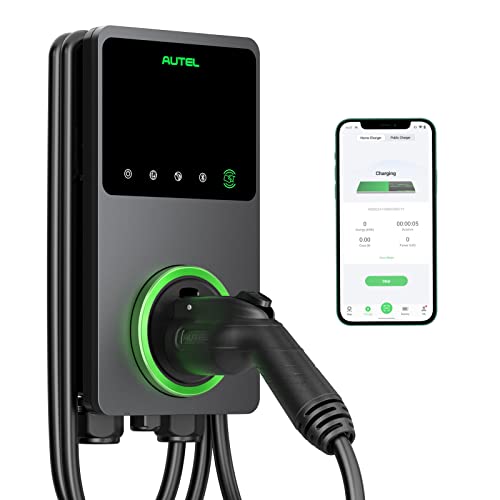
Autel
Autel MaxiCharger 50A Hardwired, 25 ft
$529.00
A 50 amp capable hardwired unit with a 25 foot cable and both Wi-Fi and Bluetooth. The second radio is what keeps it configurable in a detached garage at the edge of the house network.
- Continuous
- Up to 50 A
- Circuit
- 60 A
- Cable
- 25 ft
- Radio
- Wi-Fi and BT
Trade-off The 50 amp setting needs the same 60 amp circuit and delivers barely more than 48 amps.
Check price
Wallbox
Wallbox Pulsar Plus 48A
$699.99
The most compact enclosure in the 48 amp class by a wide margin, roughly the size of a hardback book, with a tidy cable and a J1772 connector. The pick when the mounting position is genuinely cramped.
- Output
- 11.5 kW
- Circuit
- 60 A
- Size
- Compact
- Connector
- J1772
Trade-off The compact design comes with a shorter cable than the Emporia or the Autel.
Check price
Leviton
Leviton Level 2 EV Charger, 48A
$749.99
A 48 amp station from a manufacturer most electricians already stock, rated for 208 or 240 volts, which matters in converted commercial buildings and some multi-family services.
- Output
- 11.6 kW
- Circuit
- 60 A
- Cable
- 18 ft
- Volts
- 208 or 240
Trade-off An 18 foot cable is short for the money, and cable length is what owners regret.
Check pricePaid links. Prices shown when researched and change without notice.
The Autel MaxiCharger 50A hardwired is worth its premium in exactly one situation, and it is a common one: the charger is going somewhere with poor Wi-Fi. Garages sit behind steel doors, on exterior walls, sometimes detached. A unit with Bluetooth as well as Wi-Fi can be commissioned and reconfigured from a phone standing next to it, which is the difference between a ten minute job and an afternoon. The Wi-Fi setup guide covers the rest of that problem.
The Wallbox Pulsar Plus 48A is the answer when the wall genuinely will not take a larger box, between a window and a door frame or beside a panel in a utility cupboard. Buy it for that reason and not because the photograph is tidy, because the compact design comes with a shorter cable and cable length is the specification owners regret.
Ceiling: load management, mixed households and NACS
Ceiling tier: $599 and up
None of these charges faster. Each solves a constraint the tier below cannot: a full panel, two different connectors, or a NACS-only driveway.

EMPORIA
Emporia Pro 48A with PowerSmart Load Management
$599.00
The same 48 amps with PowerSmart load management built in, so the station throttles itself when the house draws heavily instead of tripping the main. On a tight panel this device frequently replaces a service upgrade that costs several thousand dollars.
- Output
- 11.5 kW
- Circuit
- 60 A
- Load mgmt
- Built in
- Install
- Hardwired
Trade-off Wasted money on a panel with genuine headroom, because the feature never operates.
Check priceTesla
Tesla Universal Wall Connector
The only single unit that carries both a NACS and a J1772 connector, which makes it the clean answer for a household with one Tesla and one CCS1 car. Up to 48 amps on a 60 amp circuit with a 24 foot cable.
- Continuous
- Up to 48 A
- Circuit
- 60 A
- Connectors
- NACS and J1772
- Cable
- 24 ft
Trade-off Price varies and is not fixed here, so check the current figure before you commit.
Check priceWallbox
Wallbox Pulsar Plus 48A NACS
$699.99
A 48 amp NACS unit for a driveway with a Tesla or a recent Hyundai or Kia, so the car plugs in with no adapter to lose or leave in the boot of the other vehicle.
- Output
- 11.5 kW
- Circuit
- 60 A
- Connector
- NACS
- Level
- Level 2
Trade-off A J1772 car cannot use it without an expensive NACS to J1772 adapter.
Check pricePaid links. Prices shown when researched and change without notice.
Who should not buy the ceiling tier
Do not buy the Emporia Pro if your load calculation comes back with room to spare. The premium is the load management hardware, and on a panel with headroom that hardware never operates. It is an excellent purchase in the opposite case: read load management versus a panel upgrade and if your panel is tight the Pro is frequently the cheapest line on the entire project.
Do not buy the Tesla Universal Wall Connector if every car in the household uses the same connector. Its whole reason to exist is carrying both NACS and J1772, and if you only need one of them a single-connector unit plus a thirty dollar J1772 to NACS adapter covers the same ground for much less. The full comparison is in Tesla Wall Connector versus third party.
Do not buy a NACS unit like the Wallbox Pulsar Plus 48A NACS unless you are confident about the connector on your next car as well as this one. Adapters go both ways but the directions are priced very differently: J1772 to NACS is around thirty dollars, and NACS to J1772 is well over a hundred. That asymmetry is explained in NACS versus J1772.
How we chose these chargers
We did not test any of these units in person and we do not claim to. There is no lab, no instrumented garage and no sample hardware behind this page. Picks are built from published manufacturer specifications, listed safety certifications and verified owner reviews read in volume for failure patterns rather than star ratings.
Certification is the first and non-negotiable filter, and it matters more in this class than in any other on the site. A 48 amp hardwired station is a permanent part of your electrical system carrying 48 amps for hours nightly, so a UL 2594 listing or an ETL listing to that standard is the baseline. Energy Star is a useful secondary signal. The second filter is whether the unit is genuinely a 48 amp continuous device rather than a 40 amp unit with a peak figure in the marketing. The third is what the enclosure does with a hardwired termination: whether a whip is included, and whether there is room to land 6 AWG conductor without fighting it. The fourth is failure pattern, particularly connector overheating and cloud services being discontinued on a device with a fifteen year service life.
Prices were accurate when researched and change without notice. Two products in this class, the Tesla Wall Connector and the Universal Wall Connector, do not carry a fixed price here and the page does not invent one.
Buying tips for a 48 amp install
Confirm the car before you confirm the circuit
If the onboard charger caps at 6.6 kW, 48 amps buys nothing. Check the window sticker or the owner's manual rather than a specification you remember, because onboard limits changed mid-generation on several models. The charge time calculator will show you whether the extra output changes anything you care about.
Buy adjustable and you keep your options
An adjustable 48 amp unit can be configured to 40 amps on a 50 amp circuit today and turned up when the circuit is upgraded, which lets you buy the better hardware first and improve the wiring later. Discuss it with the electrician up front, because circuits are normally sized against the nameplate rating.
Ask whether the whip is in the box
Some 48 amp units ship with a factory whip and some expect the electrician to supply liquid-tight flexible conduit and terminate into the enclosure. It is a small line item that becomes a second trip to the supply house if nobody checked. The conduit guide covers what belongs where.
Do the panel calculation before the shopping
A 60 amp circuit is the point at which a load calculation stops being a formality. Two adjacent free spaces, a bus that accepts the breaker, and enough calculated headroom are three separate hurdles, and failing any of them changes the project completely. Two minutes with the panel load calculator is the cheapest step in the whole job.
Measure the cable run with the car parked as it parks
Twenty five feet sounds generous until the charge port is on the far front corner and the car reverses in. Park the car, run a tape from the intended mounting point to the port, and add slack for the arc. Detail in charger placement in a garage.
Where to go next
The full priced project is in the hardwired 48 amp buildout. If you are weighing this class against the cheaper one, read 32A vs 40A vs 48A, and if 40 amps is where you land the 40 amp roundup has the shortlist.
We review them on their own too, in full detail: the Emporia 48 amp, the Leviton 48 amp and the Wallbox Pulsar Plus.
Common questions
What size breaker does a 48 amp EV charger need?
A 60 amp two-pole breaker. EV charging is a continuous load, so the branch circuit is rated at 125 percent of the charger output: 48 multiplied by 1.25 is 60. Running a 48 amp charger on a 50 amp breaker is both a code violation and a nuisance-trip problem, because the breaker would be carrying 96 percent of its rating for hours every night.
Can my car actually use 48 amps?
Most current electric cars can, because 48 amps at 240 volts is 11.5 kW and that is exactly where the onboard AC charger caps on the majority of models. A few sit slightly below, near 10.5 to 11 kW, and still use almost all of it. The clear exceptions are the Nissan Leaf and early Toyota bZ4X at 6.6 kW, where a 48 amp station charges at precisely the same speed a 32 amp one would.
Why is every 48 amp charger hardwired?
Because the receptacle options run out. A NEMA 14-50 is rated 50 amps, which supports 40 amps continuous, so it cannot supply a 48 amp charger. Receptacles above 50 amps exist but are uncommon in residential supply houses and no mainstream manufacturer designs a home unit around one. So the 48 amp class is hardwired without exception, on a 60 amp circuit.
Can I buy a 48 amp charger now and run it at 40 amps?
Yes, and it is a reasonable strategy. Most 48 amp units are adjustable at commissioning, so the electrician configures the output to match the circuit that exists. A 48 amp capable unit dialled to 40 amps runs correctly on a 50 amp circuit. Bear in mind that electricians normally size the circuit for the nameplate rating rather than the configured setting, so discuss the plan before the work starts.
How much faster is 48 amps than 40 amps in practice?
About 1.9 kW, which is roughly six miles of range per hour on an average crossover and around eight on an efficient sedan. Over a nine hour overnight session that is 50 to 70 extra miles, which matters if you drive a large pack down regularly and matters very little otherwise. The honest test is whether the car is full by morning either way.
Does a 60 amp circuit fit on a 200 amp panel?
Usually yes, but the load calculation decides it rather than arithmetic. A 60 amp circuit is 30 percent of a 200 amp service on nameplate, and the code load calculation is not a simple sum. Two physical constraints bite first: the panel needs two adjacent free spaces because tandem breakers cannot serve a 240 volt load, and the panel bus has its own rating. A licensed electrician has to run the actual numbers.
Getting your own panel and load numbers ready for an electrician? The EV Home Charging Install Planner is the paid version of these pages: 8 printable worksheets you fill in with your own numbers, plus the full PDF, $29.
How this page was researched
Specifications come from manufacturer documentation, listed safety certifications and verified owner reviews. We do not perform hands-on product testing and never claim to. Figures are researched planning information, not professional electrical advice. Last reviewed 2026-08-17.