NACS vs J1772: Which Plug to Put on the Wall
Short answer
Buy the connector your car has today. A J1772 to NACS adapter, which lets a Tesla draw from a J1772 wall unit, costs about $30. The reverse adapter, so a J1772 car can use a Tesla Wall Connector, runs from about $50 to $170 and the documented options sit above $100.
J1772 is the long-standing North American AC charging connector and it is what most electric cars sold here have used for over a decade. NACS is the standardised Tesla connector, published as SAE J3400, and it is what Tesla has always used and what recent Hyundai and Kia models now ship. The transition is real, it is slow, and it changes almost nothing about the wiring in your garage. What it changes is which handle you bolt to the wall, and that decision has an asymmetric cost you should understand before you spend money.
The rule is short. Buy the connector your car has today, and adapt in the cheap direction if you ever need to. For most readers that means a J1772 unit such as the Emporia 48A J1772 at $449.00. For a Tesla or a recent Ioniq 5 or EV6, it means the Emporia 48A NACS at $479.00, which is the same hardware with the other handle for thirty dollars more.
Same charger, two handles: pick the one your car has
Buy the plug your car has
EMPORIA
Emporia Level 2 EV Charger, 48A J1772
$449.00
The wall unit to buy if the car in your driveway has a J1772 inlet, which is most non-Tesla vehicles on the road today. Forty-eight amps hardwired for 11.5 kW, a 25 foot cable, a factory whip, and a J1772 handle that any NACS car can also use through a thirty dollar adapter.
- Connector
- J1772
- Output
- 11.5 kW
- Continuous
- 48 A
- Circuit
- 60 A
- Cable
- 25 ft
- Adapter cost
- About $30
Paid link. Price shown when researched.
What is physically different about the two connectors?
The interesting engineering difference is pin count, and it explains the size difference you can feel in your hand. A J1772 handle has five pins for AC charging: two power pins, a ground, a control pilot and a proximity pin. To add DC fast charging, the CCS1 standard bolts a second housing with two large DC pins underneath, which is why a CCS1 inlet on a car looks like a J1772 socket with a second mouth below it and why the flap is so tall.
NACS uses five pins for everything. The same two power pins carry AC when the car is on a wall unit and DC when it is on a fast charger, with the switching handled in the vehicle and the station rather than by adding hardware to the connector. That is the single design decision behind the size and weight difference, and it is why a NACS handle on a 48 amp cable is easier to manage in cold weather than a CCS1 handle on the same rating.
| Characteristic | J1772 and CCS1 | NACS |
|---|---|---|
| Pins in the handle | 5 for AC. CCS1 adds 2 DC pins below, so 7 in total. | 5, and the same 5 carry both AC and DC. |
| How DC fast charging happens | Through two extra large pins in a second housing, which is why a CCS1 inlet is tall. | Through the same two power pins, switched. No extra hardware in the handle. |
| Physical size and weight | Larger handle, thicker cable at the same rating, heavier in the hand. | Noticeably smaller and lighter, which matters more than it sounds after a winter. |
| How it stays in the car | A mechanical latch with a thumb release on the handle. The car adds a lock pin. | No mechanical latch on the handle. The car locks the connector electronically. |
| Standard it is published under | SAE J1772, the long-standing North American AC standard. | SAE J3400, the standardised version of the Tesla connector. |
| AC output ceiling at home | Up to 19.2 kW, which is 80 amps on a 100 amp circuit. | Up to 19.2 kW on the same circuit, so no home speed difference. |
Notice the last row, because it is the row that keeps this whole comparison in proportion. At home both connectors carry AC up to 19.2 kW, which is 80 amps on a 100 amp circuit and more than any mainstream vehicle except the Ford F-150 Lightning can accept. There is no home charging speed difference between the two connectors, at any output, ever. The full connector and adapter reference lives in the connector standards chart.
The latching difference is worth one sentence, because it changes a habit rather than a specification. A J1772 handle has a mechanical latch and a thumb release you press to remove it. NACS has no thumb release and the connector is locked electronically by the car, so you unlock the car or press a button on the handle instead. Both are fine. People coming from one to the other tug on the cable for a week.
Which cars ship which connector?
Tesla has always used NACS. Hyundai and Kia moved recent model years to a NACS inlet, which is why the Ioniq 5 and EV6 need a check rather than an assumption: the same nameplate exists with both inlets depending on the year it was built. Everything else in the mainstream still ships J1772 for AC and CCS1 for DC, and many manufacturers have announced NACS for future model years without having shipped it yet.
| Vehicle | Inlet as delivered | Onboard AC limit | Charger output that saturates it | Wall unit to buy |
|---|---|---|---|---|
| Tesla Model Y | NACS | 11.5 kW | 48 A | NACS, or J1772 plus a $30 adapter |
| Tesla Model 3 | NACS | 11.5 kW | 48 A | NACS, or J1772 plus a $30 adapter |
| Tesla Cybertruck | NACS | 11.5 kW | 48 A | NACS, or J1772 plus a $30 adapter |
| Hyundai Ioniq 5 | NACS | 10.9 kW | 48 A | NACS, or J1772 plus a $30 adapter |
| Kia EV6 | NACS | 10.9 kW | 48 A | NACS, or J1772 plus a $30 adapter |
| Ford F-150 Lightning | CCS1 | 19.2 kW | 80 A | J1772 |
| Ford Mustang Mach-E | CCS1 | 10.5 kW | 48 A | J1772 |
| Chevrolet Equinox EV | CCS1 | 11.5 kW | 48 A | J1772 |
| Chevrolet Bolt EUV | CCS1 | 11.5 kW | 48 A | J1772 |
| Rivian R1T | CCS1 | 11.5 kW | 48 A | J1772 |
| Nissan Leaf | J1772 | 6.6 kW | 32 A | J1772 |
| Volkswagen ID.4 | CCS1 | 11 kW | 48 A | J1772 |
| Honda Prologue | CCS1 | 11.5 kW | 48 A | J1772 |
| Toyota bZ4X | CCS1 | 6.6 kW | 32 A | J1772 |
Two entries in that table deserve a second look before you buy anything. The Hyundai Ioniq 5 and the Kia EV6 are the cars where the inlet depends on the build year, so open the charge flap and look rather than trusting a brochure. And the Tesla Model Y is the volume case for NACS at home, with an 11.5 kW onboard charger that a 48 amp circuit saturates exactly.
If your car has a NACS inlet
Three hardwired 48 amp units with NACS handles. All three deliver 11.5 kW on a 60 amp circuit, so the differences are software, enclosure size and price.

EMPORIA
Emporia Level 2 EV Charger, 48A NACS
$479.00
A 48 amp hardwired unit with a NACS handle, preconfigured with a whip and carrying UL and Energy Star listings. The cheapest NACS wall unit here, and the obvious choice for a single-Tesla household.
- Connector
- NACS
- Output
- 11.5 kW
- Circuit
- 60 A
- Install
- Hardwired
Trade-off A J1772 visitor needs the expensive adapter direction, so guests are awkward.
Check price
ChargePoint
ChargePoint HomeFlex NACS, Hardwired
$494.00
The HomeFlex platform with a NACS handle, hardwired and Tesla compatible. Buy it for the scheduling and the utility rebate and demand-response integrations rather than for charging speed.
- Connector
- NACS
- Install
- Hardwired
- Circuit
- Per unit rating
- Handle
- Tesla compatible
Trade-off Confirm the amperage on the listing before sizing the circuit, since HomeFlex ships in more than one rating.
Check priceWallbox
Wallbox Pulsar Plus 48A NACS
$699.99
A 48 amp NACS unit in a compact enclosure, which matters in a tight garage where the mounting position is squeezed between a door track and a window.
- Connector
- NACS
- Output
- 11.5 kW
- Continuous
- 48 A
- Circuit
- 60 A
Trade-off The most expensive of the three, and the app has the least utility programme support.
Check pricePaid links. Prices shown when researched and change without notice.
Why does the adapter direction matter so much?
Because the two directions are priced nothing like each other, and buying the wrong wall unit locks you into the expensive one for the life of the installation. An adapter that lets a NACS car use J1772 equipment is a commodity: the LENZ J1772 to NACS adapter is $29.99, rated to 80 amps and listed to UL 2251, and the Lectron J1772 to Tesla adapter is $39.99 for the same job.
Going the other way costs several times as much. The VIPTOO Tesla to J1772 adapter at $49.39 is the cheapest credible option and is rated 60 amps at 250 volts with UL 2252 testing, but the adapters documented specifically for Tesla Wall Connectors are more expensive again: the Lectron Tesla to J1772 adapter is $108.28 at 48 amps, and the Lectron NACS to J1772 adapter for Wall Connectors is $169.99 at 80 amps.
| Adapter direction | What it lets you do | Price | Availability |
|---|---|---|---|
| J1772 to NACS | A NACS car, such as a Tesla, plugging into a J1772 wall unit | $29.99 to $39.99 | Everywhere, several UL 2251 listed options |
| NACS to J1772 | A J1772 or CCS1 car plugging into a Tesla or NACS wall unit | $49.39 to $169.99 | Fewer options, and the ones listed for Wall Connectors sit above $100 |
| NACS to CCS1, DC | A CCS1 car using a Tesla Supercharger away from home | $199.99 | Specialist, high current, not a home charging item |
| NEMA 14-50 pigtail for a mobile connector | A Tesla mobile unit on a 14-50 receptacle rather than a household outlet | $44.99 | Common, and 32 amps is the mobile connector ceiling |
Read the first two rows as a single instruction. If you own a NACS car, buying a J1772 wall unit costs you thirty dollars and a habit. If you own a J1772 car, buying a NACS wall unit costs you a hundred dollars or more and a compatibility check against your specific equipment. Both outcomes work. Only one of them is cheap, and it is cheap in the direction that also makes your garage usable by any visitor with a Tesla. Certification detail and the full shortlist are in the NACS and J1772 adapter roundup.
Adapters, in both directions
One cheap direction and two expensive ones. Check the current rating against your circuit, because the most limited device in the chain sets the charging speed.

LENZ
LENZ J1772 to NACS Adapter, 80A, UL 2251
$29.99
The cheap direction. This lets a Tesla or any other NACS car draw from a J1772 wall unit, rated to 80 amps and listed to UL 2251. If you buy a J1772 charger and own a NACS car, this is the whole fix.
- Direction
- J1772 to NACS
- Rating
- 80 A
- Cert
- UL 2251
- Use
- NACS car
Trade-off One more thing to lose. Keep a spare in the car and one on the charger holster.
Check price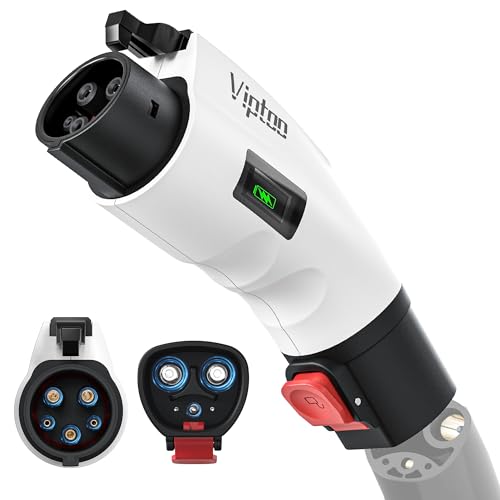
VIPTOO
VIPTOO Tesla to J1772 Adapter, UL 2252 Tested
$49.39
The expensive direction at the lower end. It lets a J1772 or CCS1 car draw from a Tesla connector, rated 60 amps at 250 volts and tested to UL 2252, with a charging status display on the body.
- Direction
- NACS to J1772
- Rating
- 60 A
- Cert
- UL 2252 tested
- Use
- J1772 car
Trade-off Not explicitly listed for every Tesla Wall Connector, so check your unit before relying on it.
Check price
Lectron
Lectron NACS to J1772 Adapter for Wall Connectors
$169.99
The adapter specified for Tesla Wall Connectors, destination chargers and mobile connectors at 80 amps and 240 volts. This is what the expensive direction genuinely costs when you want it documented.
- Direction
- NACS to J1772
- Rating
- 80 A
- Listed for
- Wall Connector
- Use
- J1772 car
Trade-off Nearly six times the price of the opposite direction, which is the argument of this page.
Check pricePaid links. Prices shown when researched and change without notice.
What about the Tesla Universal Wall Connector?
It is the one product that dissolves the argument, and for a mixed household it is worth knowing about before you commit. The Tesla Universal Wall Connector carries a NACS handle with a J1772 adapter integrated into the unit rather than loose in a glovebox, up to 48 amps on a 24 foot cable. A Tesla plugs in directly. A J1772 car uses the built-in adapter. Nothing gets lost, nothing gets left in the other car, and nobody in the household has to remember anything.
The trade is that you are buying into one manufacturer's hardware and support, the integrated adapter is another mechanism that can wear, and the 24 foot cable is marginally shorter than the 25 foot cables on several competing units. It is also worth noting the plain Tesla Wall Connector is the NACS-only version of the same unit, so check which one a listing actually is before ordering.
Two cars, two connectors
Three ways to solve a mixed-fleet garage. The cheapest is a J1772 unit plus a thirty dollar adapter; the tidiest is one unit that carries both plugs.
Tesla
Tesla Universal Wall Connector
The one wall unit that carries both connectors, a NACS handle with an integrated J1772 adapter, up to 48 amps on a 24 foot cable. For a two-car household with one Tesla and one J1772 car it removes the adapter question entirely.
- Connector
- NACS and J1772
- Output
- 11.5 kW
- Circuit
- 60 A
- Cable
- 24 ft
Trade-off Sold and supported by one manufacturer, and the integrated adapter is one more moving part.
Check price EMPORIA
Emporia Level 2 EV Charger, 48A J1772
$449.00
The other way to solve a mixed household: buy J1772 on the wall, because a J1772 handle serves a J1772 car directly and a NACS car through a thirty dollar adapter. The cheap direction, made default.
- Connector
- J1772
- Output
- 11.5 kW
- Circuit
- 60 A
- Cable
- 25 ft
Trade-off The Tesla driver has to fit an adapter every night, which someone in the house will resent.
Check price
Lectron
Lectron Tesla to J1772 Adapter, 48A
$108.28
The adapter to buy if you already own a Tesla wall unit and a J1772 car has joined the household. Rated 48 amps at 240 volts, for Tesla high powered connectors, destination chargers and mobile units.
- Direction
- NACS to J1772
- Rating
- 48 A
- Volts
- 240 V
- Use
- J1772 car
Trade-off Costs more than three of the opposite-direction adapters, and derates you to 48 amps.
Check pricePaid links. Prices shown when researched and change without notice.
Which should you put on the wall, in plain terms?
One car with a NACS inlet: buy NACS. The Emporia 48A NACS at $479.00 is the value pick, and the thirty dollar premium over the J1772 version buys you a nightly routine with no loose parts in it. One car with a J1772 or CCS1 inlet: buy J1772, and do not pay extra to future-proof a handle that costs less to replace than the adapter would.
Two cars with different inlets: buy J1772 and keep a J1772 to NACS adapter permanently on the holster, or buy the Universal Wall Connector and be done. Buying a NACS unit and a reverse adapter is the one combination to avoid, because it is the expensive direction and it is the direction with the compatibility caveats.
A Tesla owner who already has a Tesla wall unit and has just added a J1772 car is the awkward case, and the honest arithmetic is worth doing. A reverse adapter at $108.28 against a second wall unit at $449.00 clearly favours the adapter, unless both cars need to charge simultaneously, in which case you are looking at a second circuit and a second unit regardless of connectors. Tesla-specific options are compared in the best chargers for Tesla roundup.
Does a J1772 wall unit lose value as the fleet moves to NACS?
A little, and much less than people assume. Three things blunt it. First, the installed base: tens of millions of J1772 and CCS1 vehicles are on the road and will be for the whole life of any charger you buy now, so a J1772 handle stays useful to somebody for a very long time. Second, the adapter economics run in your favour: a future NACS car in your driveway is a thirty dollar problem, not a replacement.
Third, and most importantly, the valuable half of the installation is not the box on the wall. It is the 60 amp circuit, the conductor in the wall, the breaker, the permit and the inspection, and none of that cares which handle is attached. Wall units cost 400 to 700 dollars and get replaced. Circuits cost 900 to 2,000 dollars and stay for the life of the house. Wire for the amperage you want, put whichever handle matches your car on the end of it, and treat the connector as the cheap, swappable part of the project that it genuinely is.
Where to go next
The connector question is settled quickly; the amperage question sets your budget, so read 32A vs 40A vs 48A next and check your own car's onboard limit on its vehicle page. If you are choosing between a Tesla unit and a third-party one, that is its own comparison in Tesla Wall Connector versus third party.
We review them on their own too, in full detail: the Emporia NACS charger and the Autel NACS MaxiCharger.
Common questions
Should I buy a NACS or a J1772 charger for my home?
Buy the connector your car has today. If you drive a Tesla or a recent Hyundai or Kia with a NACS inlet, buy a NACS wall unit. If you drive anything with a J1772 or CCS1 inlet, buy J1772. Matching the car removes an adapter from the routine, and the adapter you might need later in the J1772 to NACS direction costs about thirty dollars, so nothing is lost by matching now.
Why is one adapter direction so much more expensive?
Volume and liability. A J1772 to NACS adapter serves millions of Tesla drivers using ordinary public and home J1772 equipment, so it is a commodity at $29.99 to $39.99. The reverse adapter is a smaller market, has to satisfy the communication behaviour of Tesla equipment, and the versions explicitly listed for Tesla Wall Connectors run from just over $100 to about $170.
Can any J1772 car use a Tesla Wall Connector with an adapter?
Usually, but confirm the specific adapter names your generation of Wall Connector before buying. Some cheaper reverse adapters are documented only for mobile connectors and destination chargers. Also check the current rating: a 48 amp adapter on a 60 amp circuit derates the installation slightly, and the car will negotiate down to whichever device in the chain is most limited.
Does the connector affect how fast my car charges at home?
No. Both connectors carry AC at up to 19.2 kW at home, and home charging speed is set by the circuit and by the vehicle onboard AC charger, not by the plug shape. A Tesla on a 48 amp J1772 unit through an adapter charges at 11.5 kW, exactly the same as on a 48 amp NACS unit. Adapters do not slow AC charging when they are rated at or above the circuit.
Will a J1772 wall charger be obsolete in ten years?
Not obsolete, but it will be the older fitting. Tens of millions of J1772 vehicles will still be on the road, adapters cost thirty dollars, and the wiring behind the unit is identical either way. The part of the installation with real value is the 60 amp circuit, which is connector-agnostic. If a future car needs the other plug, you change a wall unit, not a circuit.
What is the best answer for a two-car household with both plugs?
Either buy a J1772 unit and give the NACS driver a thirty dollar adapter to keep in the car, which is the cheapest solution, or buy the Tesla Universal Wall Connector, which carries a NACS handle with an integrated J1772 adapter and needs no loose parts at all. Avoid the third option, a NACS unit plus a reverse adapter, because that is the expensive direction.
Getting your own panel and load numbers ready for an electrician? The EV Home Charging Install Planner is the paid version of these pages: 8 printable worksheets you fill in with your own numbers, plus the full PDF, $29.
How this page was researched
Specifications come from manufacturer documentation, listed safety certifications and verified owner reviews. We do not perform hands-on product testing and never claim to. Figures are researched planning information, not professional electrical advice. Last reviewed 2026-08-17.