Best NACS and J1772 Adapters
Short answer
Most people need a J1772 to NACS adapter, which lets a Tesla or other NACS-inlet car charge from a standard J1772 home charger. The LENZ J1772 to NACS adapter at around $29.99 is rated 80 amps and listed to UL 2251. The opposite direction, NACS to J1772, costs $50 to $170 and only works on Tesla equipment that permits non-Tesla vehicles.
The adapter almost everyone is looking for is the LENZ J1772 to NACS adapter at around $29.99. It goes on the handle of a normal J1772 home charger and lets a car with a NACS inlet plug into it. That is the cheap direction, it is listed to UL 2251, it is rated to 80 amps, and thousands of owners leave one attached permanently and never think about it again.
The direction that catches people out is the other one. Getting a J1772 car onto Tesla equipment costs between fifty and a hundred and seventy dollars, and the adapter is only half the problem, because the charging equipment itself has to permit non-Tesla vehicles. Before you spend anything, be certain which of the four rows below describes your situation.
Top pick, charging adapter
Best adapter for most people
LENZ
LENZ J1772 to NACS Adapter, 80A, UL 2251
$29.99
The adapter almost everyone actually needs: it lets a car with a NACS inlet charge from any standard J1772 station, which is nearly every home charger sold in North America. Rated to 80 amps, listed to UL 2251, and cheap enough to buy a spare for the boot.
- Direction
- J1772 to NACS
- Rating
- 80 A
- Standard
- UL 2251
- Use
- AC charging
- For
- Tesla and NACS cars
- Price class
- Under $35
Paid link. Price shown when researched.
The four directions, and which one you are in
| Adapter | Your car has | You want to use | Typical price | Verdict |
|---|---|---|---|---|
| J1772 to NACS | A car with a NACS inlet, such as a Tesla | A standard J1772 home or public charger | $30 to $40 | Cheap, widely certified and completely routine. Buy one and leave it on the handle. |
| NACS to J1772 | A car with a J1772 inlet | A Tesla Wall Connector or Destination Charger | $50 to $170 | Works only where the equipment permits non-Tesla vehicles. Verify before you buy. |
| NACS to CCS1 | A car with a CCS1 inlet, DC fast charging | A Tesla Supercharger post | $180 to $220 | A different product entirely: high voltage DC, not a home charging accessory. |
| NEMA plug adapters | Any car, via a portable charger | A different receptacle than the cord cap fits | $30 to $50 | Fine for a matched, listed set. Never a way to exceed the receptacle rating. |
Naming is the source of most of the confusion here, because listings describe adapters from either end. The reliable way to read one is to identify which end is a socket and which is a plug: an adapter for a Tesla to use a J1772 station has a J1772 socket and a NACS plug, and it is usually called a J1772 to NACS adapter. If a listing is ambiguous, look at the photograph rather than the title. The connector standards themselves are laid out on the connector standards chart.
Which cars need which adapter
Inlet type is a property of the car and, increasingly, of the model year rather than the brand. Several manufacturers have moved to a NACS inlet mid-generation, so two cars with the same badge and two years between them can need opposite adapters.
| Vehicle | Inlet | Adapter needed for a standard home charger |
|---|---|---|
| Tesla Model Y | NACS | J1772 to NACS, around $30, unless you buy a NACS wall unit |
| Tesla Model 3 | NACS | J1772 to NACS, around $30, unless you buy a NACS wall unit |
| Tesla Cybertruck | NACS | J1772 to NACS, around $30, unless you buy a NACS wall unit |
| Hyundai Ioniq 5 | NACS | J1772 to NACS, around $30, unless you buy a NACS wall unit |
| Kia EV6 | NACS | J1772 to NACS, around $30, unless you buy a NACS wall unit |
| Ford F-150 Lightning | CCS1 | None. A standard J1772 charger plugs straight in |
| Ford Mustang Mach-E | CCS1 | None. A standard J1772 charger plugs straight in |
| Chevrolet Equinox EV | CCS1 | None. A standard J1772 charger plugs straight in |
| Chevrolet Bolt EUV | CCS1 | None. A standard J1772 charger plugs straight in |
| Rivian R1T | CCS1 | None. A standard J1772 charger plugs straight in |
| Nissan Leaf | J1772 | None. A standard J1772 charger plugs straight in |
| Volkswagen ID.4 | CCS1 | None. A standard J1772 charger plugs straight in |
| Honda Prologue | CCS1 | None. A standard J1772 charger plugs straight in |
| Toyota bZ4X | CCS1 | None. A standard J1772 charger plugs straight in |
Note the asymmetry in that table, because it is the practical argument for buying J1772 hardware even for a NACS car. A J1772 wall unit serves every car on the list: the CCS1 cars directly, and the NACS cars through a thirty dollar adapter. A NACS wall unit serves the NACS cars directly and the others only through an adapter costing five times as much. Unless your household will only ever run NACS vehicles, J1772 on the wall is the more flexible purchase. The full argument is in NACS vs J1772.
Starter: the cheap direction, and the one nearly everybody buys
Starter tier: $30 to $45
J1772 to NACS adapters, plus a receptacle pigtail for people whose home install is an outlet rather than a wall unit.
LENZ
LENZ J1772 to NACS Adapter, 80A, UL 2251
$29.99
The pick, and the cheapest correct answer for a Tesla or any other NACS-inlet car that needs to use a J1772 wall unit. UL 2251 listed and rated to 80 amps, which is well beyond what any home AC circuit will ever ask of it.
- Direction
- J1772 to NACS
- Rating
- 80 A
- Listing
- UL 2251
- Type
- AC
Trade-off A small object that is easy to lose. Leave it attached to the charger handle rather than in a pocket.
Check price
Lectron
Lectron J1772 to Tesla Adapter, 80A
$39.99
The same J1772 to NACS direction, from the brand with the widest adapter range on the market. Worth the small premium if you want a company that will still be answering warranty email in five years.
- Direction
- J1772 to NACS
- Rating
- 80 A
- Volts
- 240 V
- Type
- AC
Trade-off Ten dollars more than the LENZ for the same electrical job.
Check price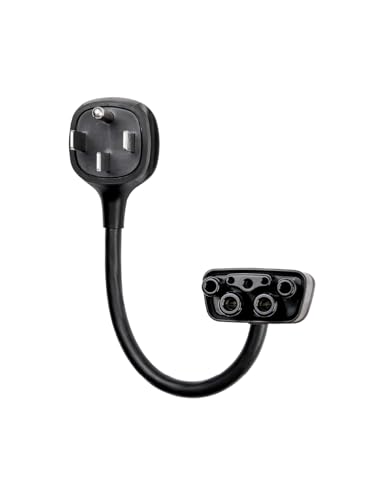
LENZ
LENZ NEMA 14-50 Adapter for Tesla Mobile Connector
$44.99
Not a connector adapter at all: a NEMA 14-50 pigtail for a Tesla Mobile Connector, so the portable charger reaches a 14-50 receptacle without stressing the cord cap. Useful if your home install is a receptacle rather than a wall unit.
- Type
- NEMA 14-50
- For
- Tesla Mobile Connector
- Length
- 16 in
- Draw
- Up to 32 A
Trade-off Only useful if you own the matching Tesla mobile connector generation.
Check pricePaid links. Prices shown when researched and change without notice.
There is very little to separate the LENZ and the Lectron electrically. Both are rated to 80 amps, which is far beyond anything a home AC circuit will ask, and both name a safety standard. Buy on price unless you specifically want the larger brand's support presence, and buy two if you have two cars, because the adapter that lives in a glovebox is the one that is missing when you need it.
One habit worth adopting on day one: keep the adapter attached to the charger handle rather than to the car. It cannot be forgotten at a public charger that way, it is never in the wrong vehicle, and the weight is carried by the handle holster rather than by the car's inlet.
Buy once: getting a J1772 car onto Tesla equipment
Buy-once tier: $49 to $170
The expensive direction. Check what your specific Tesla equipment permits before buying any of these.
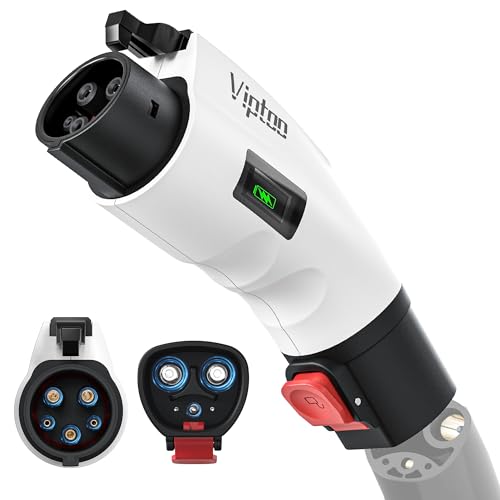
VIPTOO
VIPTOO Tesla to J1772 Adapter, UL 2252 Tested
$49.39
The other direction. This lets a J1772 car draw from Tesla AC equipment, at up to 60 amps and 250 volts, with a charging status display so you can see the session is live without opening an app. Tested to UL 2252.
- Direction
- NACS to J1772
- Rating
- 60 A
- Standard
- UL 2252 tested
- Display
- Yes
Trade-off Only works on Tesla equipment that permits non-Tesla vehicles, which is not all of it.
Check price
Lectron
Lectron Tesla to J1772 Adapter, 48A
$108.28
The established version of the same direction, rated 48 amps at 240 volts and compatible with Tesla wall, destination and mobile connectors. The one to buy if a Tesla Wall Connector is already on the wall and the new car is not a Tesla.
- Direction
- NACS to J1772
- Rating
- 48 A
- Volts
- 240 V
- Type
- AC
Trade-off Three times the price of the opposite direction, which is the normal state of this market.
Check price
Lectron
Lectron NACS to J1772 Adapter for Wall Connectors
$169.99
The premium version, rated 80 amps and built specifically around Tesla Wall Connectors and Destination Chargers. Worth it only in a household that will use it daily rather than occasionally.
- Direction
- NACS to J1772
- Rating
- 80 A
- Volts
- 240 V
- For
- Wall Connectors
Trade-off At $170 it is close to the price of simply buying a J1772 charger and being done with it.
Check pricePaid links. Prices shown when researched and change without notice.
This is the tier to think hardest about, because the arithmetic often argues against the purchase. At around $170 the Lectron NACS to J1772 adapter costs a meaningful fraction of a complete J1772 wall unit. If you have inherited a Tesla Wall Connector with a house and now drive a CCS1 car, an adapter is clearly cheaper than an install. If you are choosing hardware from scratch for a mixed household, a J1772 charger plus a thirty dollar adapter for the Tesla is both cheaper and more flexible.
The VIPTOO adapter at around $49 is the value pick in this direction, rated 60 amps with a status display that tells you the session is live. The Lectron 48 amp version is the longer-established design. In both cases the ceiling is not the adapter, it is the equipment policy at the other end.
Ceiling: DC fast charging, and removing the adapter entirely
Ceiling tier: $200 to $700
A DC fast charging adapter that has nothing to do with your garage, and the two ways to stop needing an adapter at home at all.

Lectron
Lectron NACS to CCS Adapter with Interlock
$199.99
A different category: a DC fast charging adapter that lets a CCS1 car use a Tesla Supercharger, rated 500 amps and 1,000 volts with an interlock. Nothing to do with home charging, and included because people shopping for adapters conflate the two.
- Direction
- NACS to CCS1
- Type
- DC fast
- Rating
- 500 A, 1000 V
- Interlock
- Yes
Trade-off Compatibility depends on the vehicle and the network, and it does nothing for you in a garage.
Check priceTesla
Tesla Universal Wall Connector
The way to stop needing adapters at all. A wall unit with both connector types built in, so a Tesla and a J1772 car share one 48 amp circuit with no dongle in the path. The clean answer for a mixed household.
- Connectors
- NACS and J1772
- Output
- Up to 48 A
- Circuit
- 60 A
- Cable
- 24 ft
Trade-off Considerably more than a charger plus an adapter, and it is hardwired so it stays with the house.
Check price
EMPORIA
Emporia Level 2 EV Charger, 48A NACS
$479.00
The other way to remove the adapter: buy a NACS wall unit outright. A 48 amp hardwired station with a native NACS connector costs about thirty dollars more than the J1772 version of the same unit.
- Connector
- NACS
- Output
- 48 A
- Circuit
- 60 A
- Cable
- 25 ft
Trade-off Locks the wall to NACS, so a future J1772 car in the household then needs the expensive adapter.
Check pricePaid links. Prices shown when researched and change without notice.
Why the DC adapter is on this page
Because search results mix the two categories constantly, and they are not remotely the same product. The NACS to CCS adapter handles direct current at up to 1,000 volts and 500 amps at a Supercharger post. Nothing in your garage operates anywhere near those conditions, and this adapter does nothing at all for home charging. Buy it for road trips or not at all.
The two ways to need no adapter
Buy a Tesla Universal Wall Connector with both connector types built in, or buy a native NACS wall unit if the household is entirely NACS. The Universal is the clean answer for a genuinely mixed garage, and the comparison against a third-party unit plus adapters is in Tesla Wall Connector vs third party.
How we chose these adapters
We did not test any of these adapters in person and we do not claim to. The picks are built from published manufacturer specifications, the safety standards each product names, published current and voltage ratings, and verified owner reviews read for failure patterns rather than for star ratings.
The first filter is a named safety standard. UL 2251 and UL 2252 are the relevant evaluations for EV charging connectors and adapters, and a product that names neither is a product whose manufacturer has made no claim anybody can hold them to. The second is the current rating, which should exceed what your circuit can deliver rather than merely meeting it. The third is the physical design: an adapter that cannot be supported, or that levers on the vehicle inlet under its own weight, is a mechanical problem regardless of its electrical rating. The fourth is the owner failure pattern, where recurring reports of heat marks, retention failure or handshake faults are disqualifying.
Buying tips
Rate it above your circuit, not above your car
An adapter rated 80 amps on a 60 amp circuit has margin. One rated exactly at your charging current has none, and margin is what absorbs a warm garage, a slightly worn contact and a decade of cycles.
Buy the direction, not the brand
Listings routinely describe the same adapter from either end. Confirm from the photograph which end is a socket and which is a plug before ordering, because a returned adapter is a wasted week of not charging conveniently.
Do not stack adapters
Two adapters in series double the number of connections carrying full current, and each one is a place for resistance to develop. If you find yourself needing to stack, the answer is different hardware.
Check the equipment policy before the adapter
For anything in the NACS to J1772 direction, the question is not whether the adapter works. It is whether the charging equipment permits a non-Tesla vehicle at all, and that varies by unit and generation. Confirm that first, then buy.
Where to go next
If you are still choosing the wall unit, best EV chargers for Tesla compares native NACS units against J1772 plus an adapter with the prices worked out, and best Level 2 home chargers is the main roundup. For the circuit behind it, the hardwired 48 amp buildout prices the whole job, and your own car's requirements are on its page under home charging by vehicle.
Common questions
Which adapter do I need for a Tesla to use a normal home charger?
A J1772 to NACS adapter, which is the cheap and common direction at around $30 to $40. Nearly every home charger sold in North America has a J1772 handle, and a Tesla or other NACS-inlet car needs this adapter to accept it. Look for a UL 2251 listing and a rating of at least 48 amps, then leave it permanently attached to the charger handle so it is never the reason you cannot plug in.
Can a non-Tesla car use a Tesla Wall Connector?
Sometimes, with a NACS to J1772 adapter costing $50 to $170. The adapter is only half the question: the equipment has to permit non-Tesla vehicles, and behaviour differs between Wall Connector generations, Destination Chargers and Mobile Connectors. Verify the specific unit before buying an adapter for it. In a mixed household, a Universal Wall Connector or a J1772 charger plus a cheap adapter for the Tesla is usually the better arrangement.
Is it safe to charge through an adapter every night?
A listed adapter used within its rating is designed for exactly that, and large numbers of owners live on one permanently. The practical cautions are that an adapter is one more connection in a path carrying 40 amps or more, so it should be a listed product rather than an unbranded one, it should be rated well above your actual charging current, and it should be supported rather than left hanging so its weight is not carried by the inlet.
What is the difference between UL 2251 and UL 2252?
They are the safety standards adapters are evaluated against for EV charging connections, and the important thing for a buyer is that the product names one at all. Listings and test reports are published claims a manufacturer can be held to, and an adapter that carries 48 amps through a connection you make and break daily is not the place to buy something unlisted to save fifteen dollars.
Do I need an adapter if I buy a NACS home charger?
Not for your NACS car. You would need one for any J1772 car in the household, and that is the expensive direction, which is why a J1772 wall unit plus a cheap J1772 to NACS adapter is often the more flexible purchase even for a Tesla-only household today. The exception is a house that will only ever run NACS vehicles, where a native NACS unit removes a connection from the path.
Can an adapter make my car charge faster?
No. Charging speed is set by the smaller of the charger output and the vehicle onboard charger, and an adapter changes neither. If a car charges at 6.6 kW it will do so through any adapter, on any circuit. An adapter with a low current rating can, however, make you charge slower, which is why the rating on the adapter should exceed the current your circuit can deliver.
Getting your own panel and load numbers ready for an electrician? The EV Home Charging Install Planner is the paid version of these pages: 8 printable worksheets you fill in with your own numbers, plus the full PDF, $29.
How this page was researched
Specifications come from manufacturer documentation, listed safety certifications and verified owner reviews. We do not perform hands-on product testing and never claim to. Figures are researched planning information, not professional electrical advice. Last reviewed 2026-08-17.