Solar EV Charging Calculator
Short answer
Charging 12,000 miles a year at 3.5 miles per kWh needs about 3,800 kWh, which is roughly a 2.6 kW array in a sunny region or 3.5 kW in a cloudy one, about six to nine modern panels. Whether daytime charging is worth more than overnight charging depends entirely on whether your utility pays retail rate for exported energy.
Two questions get conflated when people talk about solar charging, and separating them is most of the work. The first is how much array it takes to generate the energy a car consumes, which is a straightforward calculation. The second is whether charging while the sun is up is worth more than charging at night, which depends entirely on what your utility pays for exported energy.
The first answer is smaller than most people expect. Twelve thousand miles a year at 3.5 miles per kWh needs about 3,800 kWh, which is roughly six to nine modern panels. A car is a modest addition to a typical residential array.
Before you size an array, measure
Measure production and use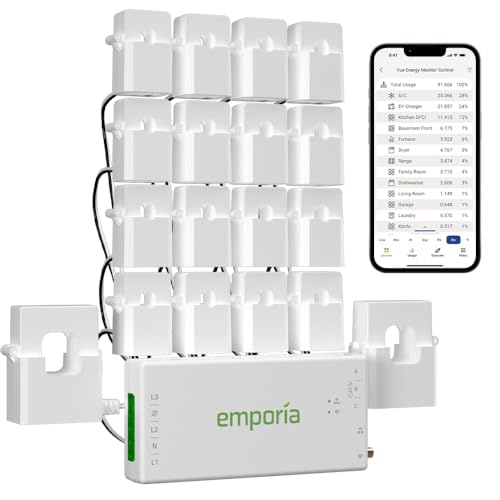
EMPORIA
Emporia Vue 3 Energy Monitor, 16 Sensors
$199.99
Solar charging maths falls apart without production and consumption data, because the whole question is how much of your array output the car can actually absorb while the sun is up. Circuit-level monitoring gives you both sides of that, which is what turns a guess into a decision.
- Sensors
- 16
- Mains
- Yes
- Solar
- Bidirectional
- Per circuit
- Yes
- Data
- Real time
- Install
- Electrician
Paid link. Price shown when researched.
Solar charging
kWh / sun hoursApplies both derates that matter: array production losses of about 20 percent, and vehicle charging losses of about 10 percent. Naive calculations that skip these undersize the array.
Realistically. If the car is at work all day, this is near zero regardless of how much sun you have.
Array needed for the car alone
2.9 kW DC
About 7 panels at 400 W
- Charging energy needed
- 3,810 kWh
- Your array produces
- 7,884 kWh
- Share of the car it covers
- 100%
- Extra value from daytime charging
- $120 per year
- Effective cost per mile
- 4.1 cents
Sizing the array
Three steps, and two derates that naive calculations skip.
- Energy at the wheels. Annual miles divided by miles per kWh. Twelve thousand miles at 3.5 gives 3,429 kWh.
- Energy at the meter. Divide by charging efficiency, around 90 percent for Level 2. That gives 3,810 kWh, and this is what you actually have to generate.
- Array size. Divide by annual production per kW. A kW of array produces roughly its peak sun hours per day, derated about 20 percent for inverter and wiring losses, soiling and temperature. At 4.5 peak sun hours that is about 1,314 kWh per kW per year, so 3,810 kWh needs about 2.9 kW.
| Region | Peak sun hours | kWh per kW per year | Array for 12,000 miles | Panels at 400 W |
|---|---|---|---|---|
| Pacific Northwest | 3.5 | 1,022 | 3.7 kW | 10 |
| Northeast and Midwest | 4 | 1,168 | 3.3 kW | 9 |
| Mid-Atlantic and Plains | 4.5 | 1,314 | 2.9 kW | 8 |
| Southeast and Texas | 5 | 1,460 | 2.6 kW | 7 |
| Southwest and California | 5.7 | 1,664 | 2.3 kW | 6 |
Even in the cloudiest region on this table, a car is under nine panels. That is genuinely modest against a typical residential array, and it is the reason the honest headline is that solar and EV charging pair well rather than that charging demands a huge system.
The question that actually matters: your export rate
Here is where solar charging advice usually goes wrong. In a normal grid-tied system your array feeds the house through the same panel the charger draws from, so energy is netted at the meter rather than routed to the car. There is no wire from the roof to the charger and no meaningful sense in which specific electrons charged your car.
That means the timing question reduces to arithmetic about rates.
If your utility offers full retail net metering, a kWh exported at noon and a kWh imported at midnight are worth exactly the same. Daytime charging gains you nothing at all, and you should charge whenever is convenient, which is overnight. Anybody telling you to rearrange your life to charge at midday under full net metering is giving you advice with no dollar value.
If your export rate is lower than your retail rate, which is increasingly the norm as net metering programmes are reformed, then energy consumed on site is worth more than energy exported. Every kWh you can put into the car while the sun is up saves you the retail rate instead of earning the export rate, and the gap is real money.
The calculator prices this directly. At a 16.5 cent retail rate and a 6 cent export rate, the gap is 10.5 cents per kWh, and shifting 30 percent of 3,810 kWh into daylight is worth about 120 dollars a year. Not nothing, and not life-changing.
Where a battery does and does not make sense
A battery lets you store midday production and release it after dark, capturing the retail-minus-export gap on energy you could not otherwise consume in daylight. The EcoFlow Delta Pro at about $1,899.00 is a common entry point.
Run the honest arithmetic before buying one. If the gap is 10.5 cents per kWh and the battery cycles 3,600 kWh a year, it captures about 378 dollars annually against a purchase price of roughly 1,900 dollars, which is a five year payback before accounting for round-trip losses of ten to fifteen percent and eventual capacity fade. Tighten the gap to five cents and the payback runs past a decade.
Which is to say: buy a battery for outage resilience, or for a demand-charge tariff, and treat the charging benefit as a bonus. If someone is selling you a battery on EV charging economics alone, ask them to show you the same arithmetic with your own export rate in it. The full treatment is in solar and battery EV charging, and the battery line is priced honestly in the panel upgrade buildout.
Solar tracking modes on chargers
Some chargers can modulate charging current to match surplus production, ramping up when a cloud passes and down when the house draws. It is a genuinely useful feature for a specific person: someone with a poor export rate whose car is home during the day.
For everyone else the benefit is small, because the netting happens at the meter regardless and a car that is not home at noon cannot absorb midday production no matter what mode the charger is in. Before paying extra for it, be honest about the last input on the calculator: what share of your charging could genuinely happen in daylight? For most commuting households the answer is near zero.
A note on load management, which is different and often more valuable. A load management device throttles the charger against whole-home demand so a large circuit fits on a constrained service. Some units combine both functions. Compare them in the smart charger roundup.
The electrical side of adding solar and a charger
Both a solar interconnection and a charger circuit interact with the same panel, and the interaction has rules of its own. A grid-tied inverter backfeeds the busbar, and there are limits on how much combined supply a busbar of a given rating may accept relative to its main breaker. Adding both at once can force a main breaker derate, a line-side tap or a service upgrade even when neither addition alone would.
The practical advice is simply to plan them together. If solar is on your horizon at all, mention it when the charger is being quoted, because the electrician can size the panel work once. Running conduit from the roof area to the panel during a project you are already paying for costs very little, and adding it afterwards is expensive.
Check the panel side on the panel load calculator, and if it comes back tight, read load management versus a panel upgrade before assuming the answer is service work.
Where to go next
Compare against grid charging on the charging cost calculator, check whether a tariff change beats solar on effort-adjusted return with the time-of-use savings calculator, and read solar and battery EV charging for the full picture including export rate reform.
Common questions
How many solar panels does it take to charge an EV?
For 12,000 miles a year at 3.5 miles per kWh, you need roughly 3,800 kWh of production, which is about a 2.6 kW array in a sunny region or a 3.5 kW array in a cloudy one. That is roughly six to nine modern panels. Charging a car is a smaller addition to an array than most people expect.
Can I charge directly from solar without the grid?
In a grid-tied system, not in the way people imagine. Your array feeds the house and the car draws from the same panel, so energy is netted rather than routed. Charging while the sun is up means your production offsets the draw instead of being exported. True off-grid charging needs battery storage and is a much larger project.
Does solar make overnight charging pointless?
No, and this is the key insight. If your utility offers full retail net metering, energy exported at midday and drawn back at midnight is economically identical, so charge whenever is convenient. If your export rate is lower than your retail rate, which is increasingly common, daytime charging is genuinely worth more and the gap is what a battery would capture.
Is a home battery worth it for EV charging?
Rarely on charging economics alone. A battery lets you store midday production for evening charging, capturing the gap between retail and export rates. At typical residential tariffs that gap is small enough that payback often runs past the battery warranty. Buy a battery for outage resilience or a demand-charge tariff, and treat the charging benefit as a bonus.
Do I need a special charger for solar?
No, though some chargers offer a solar tracking mode that modulates charging current to match surplus production. It is a genuinely nice feature for someone home during the day with a poor export rate. For everyone else a normal scheduled charge achieves nearly the same outcome, because the netting happens at the meter either way.
What efficiency losses apply to solar charging?
Two stack up. The array itself has inverter and wiring losses, so a nameplate kW rarely produces a full kW at the panel, and the standard planning derate is around 20 percent. Then the vehicle onboard charger loses roughly ten percent more. This calculator applies both, which is why the array size it suggests is larger than a naive kWh division.
Getting your own panel and load numbers ready for an electrician? The EV Home Charging Install Planner is the paid version of these pages: 8 printable worksheets you fill in with your own numbers, plus the full PDF, $29.
How this page was researched
Specifications come from manufacturer documentation, listed safety certifications and verified owner reviews. We do not perform hands-on product testing and never claim to. Figures are researched planning information, not professional electrical advice. Last reviewed 2026-08-17.