Best Portable EV Chargers
Short answer
The best portable EV charger is the WOLFBOX 40A dual-voltage unit at around $229.99, because it runs at 12 amps from a household outlet and at the full 40 amps and 9.6 kW from a NEMA 14-50. In this category you are buying a plug set and a duty rating rather than a charging speed, and a unit that only has a 14-50 plug only solves one situation.
The best portable EV charger is the WOLFBOX 40A dual-voltage unit at around $229.99. It is the only unit here that does the full 40 amps at 240 volts and also falls back to 12 amps on a household outlet, which is the definition of portable that actually matters. The MUSTART 40A at around $219.99 is ten dollars cheaper with the same 25 foot cable and a longer ownership record, but it is 240 volts only. The Tesla Mobile Connector at around $300.00 is the pick only if your car has a NACS inlet and you would rather not own an adapter.
Here is the thing about this category that the listings obscure. A portable charger is not a different kind of device from a plug-in wall charger. It is the same device with a different plug set and, sometimes, a handle. What you are actually shopping for is two specifications: which receptacles the unit can plug into, and how much current it will draw for hours at a time. Everything else, including the word portable, is packaging.
Top pick, portable charging unit
Best portable unit
WOLFBOX
WOLFBOX Portable Level 1 and 2, 40A
$229.99
The only unit here sold as both Level 1 and Level 2 at the full 40 amp rating, which is what portability actually means. It works at 120 volts at a relative's house and delivers up to 9.6 kW from a 240 volt circuit in your own garage, so one unit covers both ends of the range instead of two. What you are buying in this category is a plug set and a duty rating, so check the listing for which plugs and adapters are in the box before you order.
- Rated
- 40 A
- Levels
- 1 and 2
- At 240 V
- Up to 9.6 kW
- Circuit
- 50 A
- Connector
- J1772
Paid link. Price shown when researched.
What are you actually buying when you buy portable?
Two numbers and one accessory. The two numbers are the continuous current rating and the voltage range. The accessory is the plug, and it is the plug that determines where the unit is useful. A 40 amp unit with only a NEMA 14-50 plug is a superb home charger for a garage with a 14-50 and completely useless in a garage without one. A 16 amp unit with a 5-15 plug and a 6-20 plug will find something to plug into almost anywhere and will never be fast.
The framing that helps is to stop thinking of these as chargers and start thinking of them as cordsets with a control box. The control box negotiates with the car over the pilot signal, offers a current level, and the car draws the lower of what it can accept and what is offered. The box does not create power. The circuit behind the receptacle does, and the receptacle is the interface where everything mechanical can go wrong.
| Unit | Plug set | Max continuous | Power at that setting | Cable |
|---|---|---|---|---|
| VEVOR 16A, 120 or 240 V | NEMA 6-20P with 5-15 adapter | 16 A | 3.8 kW | 28 ft ft |
| EVDANCE 16A, 120 or 240 V | Per listing | 16 A | 3.8 kW | 25 ft ft |
| ChargeHere 16A, 120 or 240 V | NEMA 5-15 and 6-20 | 16 A | 3.8 kW | 25 ft ft |
| AIMILER 32A | NEMA 14-50P | 32 A | 7.7 kW | 25 ft ft |
| Tesla Mobile Connector | Adapters per listing | 32 A | 7.7 kW | 20 ft ft |
| ELEGRP 40A, 240 V | NEMA 14-50 | 40 A | 9.6 kW | 25 ft ft |
| MUSTART 40A, 240 V | NEMA 14-50 | 40 A | 9.6 kW | 25 ft ft |
| WOLFBOX 40A, Level 1 and 2 | Per listing | 40 A | 9.6 kW | Not stated ft |
| Lectron 40A, 240 V | NEMA 14-50 | 40 A | 9.6 kW | 16 ft ft |
Read the last two columns together, because they are the two people regret. Cable length is the specification that decides whether a unit reaches the charge port in a garage you have not parked in before, and 16 feet frequently does not. Continuous rating is the one that decides whether you can trust the receptacle, and higher is not automatically better. A 40 amp unit is exactly what you want on a circuit you had installed and inspected, and exactly what you do not want on an unknown one.
Which receptacle can carry what?
Every receptacle has a continuous limit, and it is 80 percent of its rating, because EV charging is a continuous load and circuits are sized at 125 percent. That single rule explains the whole table below and it explains why a NEMA 14-50 is always paired with a 40 amp unit rather than a 50 amp one.
| Receptacle | Volts | Rating | Continuous limit | What it is |
|---|---|---|---|---|
| 5-15R | 120 V | 15 A | 12 A | Standard household outlet. Level 1 only. |
| 5-20R | 120 V | 20 A | 16 A | A dedicated 120 volt circuit. The best Level 1 can do. |
| 6-20R | 240 V | 20 A | 16 A | The cheapest genuine 240 volt option. Roughly 3.8 kW. |
| 14-30R | 240 V | 30 A | 24 A | Modern dryer outlet. The usual target for a splitter install. |
| 6-50R | 240 V | 50 A | 40 A | Welder outlet. Three wires, so a cheaper run than a 14-50. |
| 14-50R | 240 V | 50 A | 40 A | The default EV and RV outlet. 40 amps continuous, 9.6 kW. |
The 14-50 row is where portable charging lives and where it stops. Forty amps continuous is 9.6 kW, and there is no plug-in step above it, because receptacles rated higher are uncommon in residential supply houses and no mainstream manufacturer builds a 48 amp unit around one. If you want 11.5 kW at home the unit is hardwired and it is not portable, which is the whole boundary of this category. The full receptacle reference is in the NEMA plug types chart, and the choice between the two 50 amp receptacles is worked through in NEMA 14-50 versus 6-50.
The receptacle you did not install is the risk
This is the section that justifies the page. The scenario is specific and it is common: you arrive at a holiday rental, or your parents' house, or a property you have just bought, and there is a NEMA 14-50 in the garage. It was put there for an RV, or a welder, or by a previous owner for reasons nobody remembers. You plug in a 40 amp portable unit and it draws 40 amps continuously for the next eight hours.
A builder-grade 14-50 receptacle costs under ten dollars and was designed for an RV that plugs in a few weekends a year. The contacts are stamped rather than substantial, and the plug face is the single most likely component in any charging installation to fail. Add a decade of thermal cycling, possibly a backstab-style termination, possibly aluminium conductor, and you have a joint that has never been asked to carry 40 amps for a full night. Contact resistance rises, the joint warms, the warmth accelerates the oxidation, and the failure builds over hours rather than announcing itself.
The mitigation is not complicated and it costs nothing. On any receptacle whose history you do not know, reduce the current. If your unit has an app or a dial, set it to 16 or 24 amps for the first night. If it does not, this is the argument for owning a unit that does, which is why the AIMILER 32A sits in the ceiling tier of this page despite being one of the cheaper units on it. Then touch the plug and the wall plate an hour in. If either is warm, unplug and stop. A warm plug face is not a quirk, it is the beginning of a failure.
Starter: 16 amps, two plugs and the widest compatibility
The starter tier is not the compromise tier for this category, it is arguably the most portable tier. A 16 amp dual-voltage unit will plug into a household outlet anywhere in North America and into a 20 amp 240 volt circuit if one exists, weighs least, coils smallest, and asks the least of any receptacle it meets. Sixteen amps at 240 volts is 3.8 kW, or 11 to 14 miles of range per hour, which is nearly three times what a household outlet delivers.
Starter tier: 16 amp dual voltage, $116 to $130
The widest compatibility and the lightest load on any circuit. All three run at 12 amps on 120 volts and 16 amps on 240.

VEVOR
VEVOR Level 1 and 2 Portable, 16A
$115.97
Rated 16 amps at either 120 or 240 volts, with a 28 foot cable, a NEMA 6-20 plug and a 5-15 adapter in the box. The lightest unit here to carry and the least demanding on whatever circuit it finds, which is exactly the right trade for a unit that visits unfamiliar outlets.
- Rated
- 16 A
- Volts
- 120 or 240
- At 240 V
- 3.8 kW
- Cable
- 28 ft
- Plug
- NEMA 6-20P
- Adapter
- NEMA 5-15
Trade-off At 16 amps it is the slowest Level 2 there is, so it is a travel unit rather than a home unit.
Check price
EVDANCE
EVDANCE Level 1 and 2 Portable, 16A
$119.99
ETL listed, dual voltage, and a 25 foot cable, which is the specification that decides whether a unit reaches the charge port in a garage you have never parked in before. Twelve amps at 120 volts and sixteen at 240.
- At 120 V
- 12 A
- At 240 V
- 16 A
- Level 2
- 3.8 kW
- Cable
- 25 ft
- Cert
- ETL Listed
Trade-off No adjustable amperage, so you cannot dial it back on a circuit you do not trust.
Check price
CHARGEHERE
ChargeHere 16A Portable, UL Listed
$129.99
UL listed rather than ETL, which is the stricter and more widely recognised mark and a genuine tiebreaker at this price. It ships with both a 5-15 and a 6-20 plug, which is the pair that covers a household outlet and the cheapest real 240 volt circuit.
- Rated
- 16 A
- Volts
- 120 or 240
- At 240 V
- 3.8 kW
- Plugs
- 5-15 and 6-20
- Cert
- UL Listed
Trade-off A 6-20 plug is the wrong plug for the 14-50 you will meet most often when travelling.
Check pricePaid links. Prices shown when researched and change without notice.
The ChargeHere 16A is the certification pick, UL listed rather than ETL, and the 6-20 plug in the box points at the cheapest real 240 volt circuit there is. The VEVOR unit has the longest cable on the page at 28 feet and the lowest price, and the EVDANCE unit sits between them with 25 feet and an ETL listing. If this unit's job is to live in the boot and cover unfamiliar outlets rather than to be your everyday charger, buy here and stop.
Buy once: a 40 amp unit with a 25 foot cable
This is the tier for a household that has, or is about to have, a properly installed NEMA 14-50 and wants a unit that can also be unplugged and taken somewhere. Forty amps on a 50 amp circuit is 9.6 kW, roughly 30 miles of range per hour on an average crossover, and it is the maximum a plug-in unit can do. All four below deliver that identical figure on that identical circuit. What separates them is cable length, whether the unit works at 120 volts as well, and how long the model has been on the market.
Buy-once tier: 40 amp portables, $210 to $270
Identical 9.6 kW output on a 50 amp circuit. The differences are cable length, dual-voltage capability and ownership history.

ELEGRP
ELEGRP 40A NEMA 14-50 Portable
$209.99
A 40 amp NEMA 14-50 portable with a 25 foot cable and an ETL certification, at the lowest price in the 40 amp class. On a properly sized 50 amp circuit it delivers 9.6 kW, which is around 30 miles of range per hour on an average crossover.
- Output
- 9.6 kW
- Continuous
- 40 A
- Plug
- 14-50
- Cable
- 25 ft
Trade-off 240 volts only, so it cannot fall back to a household outlet when there is no 14-50.
Check price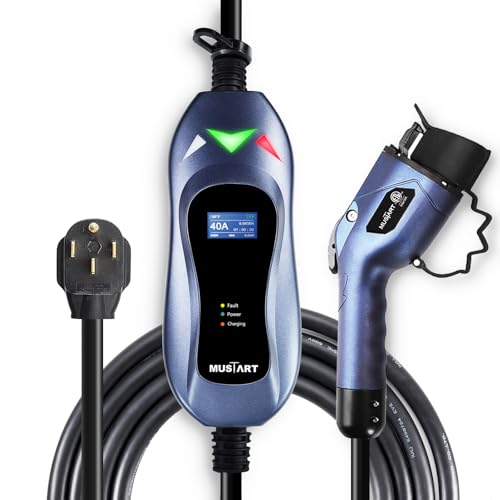
MUSTART
MUSTART 40A Portable, 25 ft Cable
$219.99
A 40 amp unit with a 25 foot cable that has been on the market long enough to have a real ownership record rather than a launch-week one. The plug is a NEMA 14-50 and the case is built to be coiled and carried rather than bolted down.
- Output
- 9.6 kW
- Continuous
- 40 A
- Plug
- 14-50
- Cable
- 25 ft
Trade-off Also 240 volts only, and there is no way to reduce its current draw for an unknown receptacle.
Check price WOLFBOX
WOLFBOX Portable Level 1 and 2, 40A
$229.99
The pick. A 40 amp rating sold as both Level 1 and Level 2, so one unit covers a 240 volt circuit in your own garage and a household outlet anywhere else. A unit that spans both voltages at the full 40 amps is rarer in this class than the listings make it sound.
- Rated
- 40 A
- Levels
- 1 and 2
- At 240 V
- Up to 9.6 kW
- Circuit
- 50 A
Trade-off You pay for 40 amp hardware even on the nights it is running from a wall socket at a fraction of that.
Check price
Lectron
Lectron 40A NEMA 14-50 Plug-In
$269.99
A 40 amp ETL certified unit on a NEMA 14-50 plug, which is the lowest-friction path to real Level 2 if a properly sized 14-50 already exists in the garage. It comes off the wall in seconds when you move house, which is the point of the whole category.
- Output
- 9.6 kW
- Continuous
- 40 A
- Plug
- 14-50
- Cable
- 16 ft
Trade-off A 16 foot cable is short. Measure from receptacle to charge port before you commit to it.
Check pricePaid links. Prices shown when researched and change without notice.
The WOLFBOX unit wins this tier on the dual-voltage point, and it is not a small one. A 40 amp unit that also works on a household outlet is a single device that covers your own garage and every other situation. The ELEGRP 40A is the cheapest way into the class with the same 25 foot cable, and the MUSTART 40A has been sold long enough that its owner reviews describe years of use rather than weeks.
The Lectron 40A is the odd one out and worth a sentence of its own. It is the easiest unit here to remove and take with you, which is precisely what plug-in buyers say they want, but its cable is 16 feet. Measure the run from the receptacle to the charge port with the car parked as it actually parks before you accept that number. If you want the full argument for plug-in over hardwired in a permanent installation, that is in the plug-in charger roundup.
Ceiling: adjustable output, NACS, and the adapter that finishes the job
The ceiling tier here is not the fastest tier, because 40 amps is the ceiling of the whole category and three units above already reach it. This tier is about control and about connectors. One unit lets you set the current from a phone, which is the single most useful safety feature in portable charging. One is the factory NACS cordset. One is the adapter that turns the third into a 240 volt unit.
Ceiling tier: control and connectors, $45 to $300
Not faster, better behaved. An adjustable unit and a NACS setup, priced honestly rather than ranked by output.

AIMILER
AIMILER 32A, 25 ft Cable
$199.99
Rated 32 amps rather than 40, which is the point: 32 amps is a gentler ask of an unfamiliar receptacle and 7.7 kW is still more than most cars will use overnight. ETL certified, a 25 foot cable, a NEMA 14-50 plug and a Wi-Fi app, and the app is worth having on a travelling unit if it lets you watch a session rather than guess at it.
- Output
- 7.7 kW
- Rated
- 32 A
- Circuit
- 40 A
- Cable
- 25 ft
- Plug
- NEMA 14-50P
- Cert
- ETL
Trade-off Caps at 7.7 kW, so it is the wrong buy as the permanent unit for a large-pack vehicle.
Check price
Tesla
Tesla Mobile Connector, 32A
$300.00
The factory NACS cordset, sold as Level 2 up to 32 amps with a 20 foot cable. If your car has a NACS inlet this is the setup with the fewest moving parts in the path: no J1772 to NACS adapter hanging off the connector, and no question about which end fits what. Check the listing for which plug adapters are included.
- Connector
- NACS
- Rated
- Up to 32 A
- Cable
- 20 ft
- At 240 V
- 7.7 kW
Trade-off The most expensive unit here, and the plug adapters that widen its range are a separate purchase.
Check price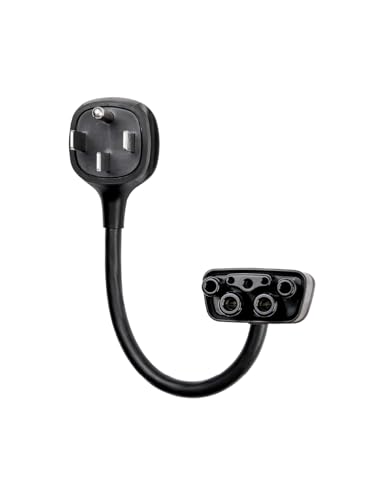
LENZ
LENZ NEMA 14-50 Adapter for Tesla Mobile Connector
$44.99
The NEMA 14-50 adapter that turns a Tesla Mobile Connector from a 120 volt cordset into a 240 volt one. Sixteen inches long, which keeps the weight of the adapter off the receptacle face rather than hanging a heavy body directly on the contacts.
- Fits
- Mobile Connector
- Plug
- NEMA 14-50
- Length
- 16 in
- Volts
- 240 V
Trade-off Useless without the Tesla cordset, and it does not raise the unit above its own 32 amp limit.
Check pricePaid links. Prices shown when researched and change without notice.
Who should not buy at this tier
Anyone with a J1772 car and a 14-50 they had installed themselves. If the circuit is yours, you watched it go in, and the receptacle is EV rated, the ability to dial the current down solves a problem you do not have and the NACS cordset is the wrong connector. Buy a 40 amp unit from the tier above and spend the difference on cable length.
Anyone treating the LENZ NEMA 14-50 adapter as a standalone purchase should also stop. It exists to give a Tesla Mobile Connector a 240 volt plug and it does nothing without that cordset. It is on this page because a Mobile Connector without it is a 1.4 kW device, and a lot of people buy the first and not the second and then conclude the unit is slow.
How we chose these chargers
We did not test any of these units in person and we do not claim to. There is no lab, no instrumented garage and no sample hardware behind this page, and no thermal measurements of our own on any plug face.
The picks come from published specifications, listed safety certifications and verified owner reviews read in volume. Certification is the first filter and it is not negotiable in this category in particular, because a portable unit is handled, coiled, dropped and left on wet concrete in a way a wall-mounted unit never is. A UL listing or an ETL listing to the relevant standard is the baseline, and where a unit carries UL rather than ETL that is called out, since UL is the stricter and more widely recognised mark.
The second filter is plug-set honesty. A number of listings in this class describe a unit as Level 1 and Level 2 when what they mean is that an adapter is available, and several quote an amperage the unit only reaches at 240 volts while implying it applies at 120. Every figure in the tables above is the continuous rating at the stated voltage. The third filter is cable length, and the fourth is failure pattern in owner reviews, which in this category clusters hard around plug faces running warm, control boxes failing after outdoor exposure, and adapters with loose fits. Prices were accurate when researched and change without notice, and any product without a verified Amazon listing appears as a search link rather than an invented one.
Buying tips for a unit that travels
Buy the plug you will actually meet, not a set
For a home buyer that is a household 5-15 and a NEMA 14-50, and very occasionally a 6-20. Every extra adapter is another mechanical joint carrying 40 amps for hours, another thing to lose, and another twenty to fifty dollars. Adapters are not free in reliability terms even when they are cheap in money terms.
Dial it down on any circuit you did not have installed
This is the single most useful habit in portable charging. Set the unit to 16 or 24 amps on an unfamiliar receptacle for the first session, and check the plug face by hand an hour in. A unit that cannot be adjusted is a unit that always asks the receptacle for everything, which is fine at home and less fine everywhere else.
Never use an extension cord or a power strip
Not at 120 volts and certainly not at 240. A charging unit is a continuous load for hours and an extension cord is designed for intermittent duty, so the cord becomes the weakest joint in the path. Buy the cable length you need in the unit itself, which is why the 25 and 28 foot options above matter more than they look.
Coil it properly and keep the connector pointing down
Water sitting in an upturned connector is a slow and avoidable way to kill one, and a cable coiled tightly around the control box stresses the strain relief where the cable enters. Hang the unit, keep the connector face down when it is not in use, and keep the whole assembly off a wet floor.
Work out whether portable is really what you want
If the unit will hang in one garage for ten years, a plug-in wall unit or a hardwired one is a better product with better weather protection and a tidier cable. Portability costs you enclosure quality and caps you at 40 amps. Put your own pack size and overnight window into the charge time calculator and see whether 9.6 kW is genuinely enough before you decide the ceiling of this category is acceptable.
Where to go next
If your unit will mostly live on a household outlet, the honest comparison is in the Level 1 roundup, where the same 1.4 kW is available for forty dollars less. If a permanent 240 volt receptacle is the plan, choose between the two candidates in NEMA 14-50 versus 6-50 and then read the plug-in charger roundup, which covers the same 40 amp ceiling in units built to stay on a wall.
We review it on its own too, in full detail: the Tesla Mobile Connector.
Common questions
What actually makes an EV charger portable?
The plug, not the size. Every plug-in charging unit is portable in the sense that it can be unplugged and carried, so what separates a portable unit from a plug-in wall unit is the plug set it ships with and whether it works at both 120 and 240 volts. A unit with a 5-15 plug and a 14-50 plug covers a household outlet and a proper 240 volt circuit. A unit with only a 14-50 covers one situation.
Can I plug a 40 amp portable charger into any NEMA 14-50 outlet?
Physically yes, safely not always. A 14-50 supports 40 amps continuous only if the receptacle, the conductor and the breaker behind it are all correct, and a builder-grade receptacle installed years ago for an occasional RV has not carried 40 amps for eight hours before. On an outlet whose history you do not know, use a unit that lets you reduce the current, or use a 16 or 32 amp unit instead.
Is a portable charger slower than a wall-mounted one?
Not inherently. A 40 amp portable on a 50 amp circuit delivers the same 9.6 kW as a 40 amp wall unit on the same circuit, because the circuit and the car set the ceiling rather than the enclosure. The real difference is the amperage ceiling: above 40 amps continuous there is effectively no plug-in option, so the 48 amp and 11.5 kW class is hardwired and out of reach of anything portable.
Do I need an adapter set with a portable charger?
Only for the receptacles you actually expect to meet, which for a home buyer is usually one or two. A household 5-15 and a NEMA 14-50 cover the overwhelming majority of situations. Collecting adapters for every plug in the chart adds cost, adds mechanical joints in the current path, and adds things to lose. Buy the plug you need and treat extra adapters as a specific decision rather than a set.
Should a portable charger live outdoors?
No. Portable units are generally rated for outdoor use while charging rather than for permanent outdoor mounting, and the plug face is the part that suffers. Water sitting in an upturned connector, a control box in direct sun all summer and a cable coiled on wet concrete all shorten its life. If the charger will live outside permanently, buy a unit rated for that and mount it properly instead.
Can I install the receptacle for a portable charger myself?
No. A NEMA 14-50 on a 50 amp circuit is a 240 volt branch circuit with conductor sizing, breaker sizing, grounding and ground-fault requirements that vary by jurisdiction. A licensed electrician must size and install it, a permit and inspection are normally required, and the receptacle grade matters because a builder-grade device is not built for 40 amps for eight hours nightly.
Getting your own panel and load numbers ready for an electrician? The EV Home Charging Install Planner is the paid version of these pages: 8 printable worksheets you fill in with your own numbers, plus the full PDF, $29.
How this page was researched
Specifications come from manufacturer documentation, listed safety certifications and verified owner reviews. We do not perform hands-on product testing and never claim to. Figures are researched planning information, not professional electrical advice. Last reviewed 2026-08-17.