Best Long Cable EV Chargers
Short answer
The best long cable EV charger is the Emporia 48A at around $449, which pairs 25 feet of cable with 11.5 kW on a 60 amp circuit. A 25 foot cable lets one mounting point serve both bays of a two-car garage and reach a car parked either way round, while a 16 foot cable often will not cross the same garage.
The best long cable EV charger is the Emporia 48A hardwired station at around $449, which puts 25 feet of cable on a unit delivering 11.5 kW on a 60 amp circuit. If you want the same 25 feet with a second radio for a charger mounted at the far corner of the property, the Autel MaxiCharger 50A hardwired at around $529 carries Wi-Fi and Bluetooth. On a tighter budget the ELEGRP 40A at $209.99 gives you the same 25 feet for a fifth of the money.
This is the one specification on a home charger where the popular advice is backwards. People shop amperage, argue about 40 against 48, and then buy a unit with a 16 foot cable that cannot reach the far side of their own garage. The step from 40 to 48 amps buys 1.9 kW, roughly six miles of range per hour on a session that finishes overnight either way. The step from 16 feet to 25 feet decides whether the cable reaches the car at all. One of those is a preference and the other is a yes or no.
Top pick, long cable EV charger
Longest cable at the best price
EMPORIA
Emporia Level 2 EV Charger, 48A J1772
$449.00
Twenty five feet of cable on a hardwired 48 amp station, which is the combination that lets one mounting point serve both bays of a two-car garage and reach a car parked nose in or backed in. It delivers 11.5 kW on a 60 amp circuit and reports energy per session, and it ships preconfigured for a hardwired install with a whip.
- Cable
- 25 ft
- Output
- 11.5 kW
- Continuous
- 48 A
- Circuit
- 60 A
- Install
- Hardwired
- Smart
- Wi-Fi
Paid link. Price shown when researched.
How much cable does your garage actually need?
Cable length is a geometry problem and it has an answer, so it is worth doing the arithmetic rather than guessing. Take a standard two-car garage, roughly 20 feet wide and 20 feet deep, with the charger on a side wall at about waist height. The distance the cable has to cover is the straight line from the box to the charge port, plus the drape it needs to hang in an arc instead of stretching, plus the height it has to come down from. In practice that means adding three to five feet to whatever the tape measure says.
| Where the car parks and where the port is | Straight-line distance | Cable actually needed | Verdict |
|---|---|---|---|
| Near bay, port on the wall side, same end as the charger | 8 to 10 ft | 12 to 14 ft | A 16 foot cable is fine |
| Near bay, port on the wall side, opposite end of the car | 14 to 16 ft | 18 to 21 ft | 16 ft is marginal, 20 ft works |
| Near bay, port on the far side of the car | 18 to 20 ft | 22 to 25 ft | 25 ft required |
| Far bay, port on the near side | 18 to 22 ft | 23 to 27 ft | 25 ft, and only just |
| Far bay, port on the far side of the car | 26 to 30 ft | 31 to 36 ft | Move the charger, do not buy cable |
The third and fourth rows are the whole argument for a 25 foot cable, and they are not unusual cases. They are the normal case for any household where the car sometimes parks in the other bay, where a partner parks nose in and you back in, or where the charge port happens to be on the wrong side of the car for the only wall you can mount to.
That last point is worth dwelling on, because port position varies enormously and you do not get to choose it. Some cars put the port on the front left fender, some on the front right, some on the rear left quarter, some on the rear right, and a few in the nose. A garage that works perfectly for a car with a front-left port becomes a daily annoyance the moment you replace it with one whose port is at the rear right, because the cable now has to travel the entire length of the car before it starts crossing the garage. A 25 foot cable absorbs that change. A 16 foot cable makes it a rewiring job.
The mounting height compromise is the other half of it. Mount high and the connector hangs where it will not be driven over, but you lose reach to a low port and the cable pulls down on the handle. Mount low and you gain reach but the cable rests on the floor. Waist height, around 42 to 48 inches, is the usual compromise, and the detailed version with the arc calculation is in charger placement in a garage.
Which chargers actually have long cables?
Fewer than the marketing suggests. Twenty five feet is the practical maximum in this category and a surprising number of premium units ship 16 or 18 feet, because a shorter cable is cheaper to make and lighter to ship. The table below is every unit on this page with the cable length its own listing states.
| Charger | Cable | Continuous | Install | Price |
|---|---|---|---|---|
| EVDANCE Level 1 and 2 Portable, 16A | 25 ft | 16 A | Portable | $119.99 |
| BETUMODA Level 2 EV Charger, 40A with 25 ft Cable | 25 ft | 40 A | Plug-in | $169.99 |
| AIMILER 32A, 25 ft Cable | 25 ft | 32 A | Plug-in | $199.99 |
| ELEGRP 40A NEMA 14-50 Portable | 25 ft | 40 A | Plug-in | $209.99 |
| MUSTART 40A Portable, 25 ft Cable | 25 ft | 40 A | Plug-in | $219.99 |
| Autel MaxiCharger 40A | 25 ft | Up to 40 A | Plug-in | $375.99 |
| Emporia Level 2 EV Charger, 48A J1772 | 25 ft | 48 A | Hardwired | $449.00 |
| Autel MaxiCharger 50A Hardwired, 25 ft | 25 ft | Up to 50 A | Hardwired | $529.00 |
| Lectron Nexus 48A J1772 | 23 ft | 48 A | Hardwired | $429.99 |
One deliberate omission from that table is worth explaining, because it is a useful lesson in how to shop this specification. The Grizzl-E Classic 40A is an excellent metal-cased charger and it is the pick on several other pages here, but its listing does not state a cable length. When a listing is silent on the one specification you are shopping for, the honest thing to do is leave it out of the comparison rather than fill the gap with an assumption. Confirm the length on the rating label or the manual before you buy it for reach specifically.
Notice also that the cheap end of the table matches the expensive end on the specification that matters here. The AIMILER 32A at $199.99 and the MUSTART 40A at $219.99 both carry 25 feet of cable, the same as units at three times the price. Long cables are not a premium feature, they are a specification most brands simply do not prioritise.
Starter: 25 feet on a small budget
If a suitable receptacle already exists in the garage, the cheapest way to fix a reach problem is a plug-in unit with a long cable, and this tier does that for between 120 and 210 dollars. None of these is a compromise on reach. All three carry the full 25 feet.
Starter tier: $119 to $210, all 25 feet
Plug-in and portable units with full-length cables. The compromise is amperage and certification, never reach.

EVDANCE
EVDANCE Level 1 and 2 Portable, 16A
$119.99
Twenty five feet of cable for the price of a set of wiper blades. It is a dual-voltage portable that runs 12 amps at 120 volts and 16 amps at 240 volts, ETL listed, and it reaches further than wall units costing five times as much.
- Cable
- 25 ft
- Level 1
- 1.4 kW
- Level 2
- 3.8 kW
- Cert
- ETL
Trade-off At 16 amps on 240 volts this is the slowest Level 2 there is, so the reach costs you speed.
Check price
BETUMODA
BETUMODA Level 2 EV Charger, 40A with 25 ft Cable
$169.99
Forty amps and 9.6 kW with a 25 foot cable, at the lowest price anybody charges for that combination. If the receptacle already exists and the geometry is the only problem you have, this solves it for under 200 dollars.
- Cable
- 25 ft
- Output
- 9.6 kW
- Continuous
- 40 A
- Circuit
- 50 A
Trade-off The listing does not state a UL or ETL mark, so confirm the certification on the rating label before nightly use.
Check price
ELEGRP
ELEGRP 40A NEMA 14-50 Portable
$209.99
The certified version of the same idea: 40 amps, a NEMA 14-50 plug, 25 feet of cable and an ETL certification stated on the listing, for a little over 200 dollars. The best value long cable on the page if you are plugging into an existing receptacle.
- Cable
- 25 ft
- Output
- 9.6 kW
- Circuit
- 50 A
- Cert
- ETL
Trade-off No app and no energy reporting, so a time-of-use rate plan is scheduled from the car instead.
Check pricePaid links. Prices shown when researched and change without notice.
The ELEGRP 40A is the pick in this tier because it is the cheapest combination of a stated ETL certification, 40 amp output and 25 feet of cable. The EVDANCE dual-voltage unit at $119.99 is the outlier worth knowing about: it is the cheapest 25 foot cable sold, and if your real problem is a plug-in hybrid parked awkwardly rather than a large battery needing speed, it is the whole solution for the price of a tank of fuel.
Buy once: 25 feet at full output
This is the tier that solves the problem permanently. Twenty five feet of cable, 40 to 50 amps of output, and in two cases a hardwired installation that removes the plug face from the circuit. If you are paying an electrician anyway, this is where the money should go.
Buy-once tier: $375 to $529
Full-length cables at full output. The differences between these three are radio, install type and under two kilowatts.

Autel
Autel MaxiCharger 40A
$375.99
Twenty five feet of deliberately flexible cable on a 40 amp unit with a NEMA 14-50 plug, listed for indoor or outdoor use. Cable flexibility is a specification people ignore until the first cold morning, and it is the reason this unit is easier to live with than its numbers suggest.
- Cable
- 25 ft
- Output
- 9.6 kW
- Continuous
- 40 A
- Plug
- 14-50
Trade-off Forty amps rather than 48, so on a car that can take 11.5 kW you give up under two kilowatts.
Check price EMPORIA
Emporia Level 2 EV Charger, 48A J1772
$449.00
The pick. Twenty five feet of cable on a hardwired 48 amp station delivering 11.5 kW, with Wi-Fi and per-session energy reporting and a factory whip in the box. The most reach per dollar in the 48 amp class by a clear margin.
- Cable
- 25 ft
- Output
- 11.5 kW
- Circuit
- 60 A
- Install
- Hardwired
Trade-off Hardwired, so the mounting position is permanent. Get the geometry right the first time.
Check price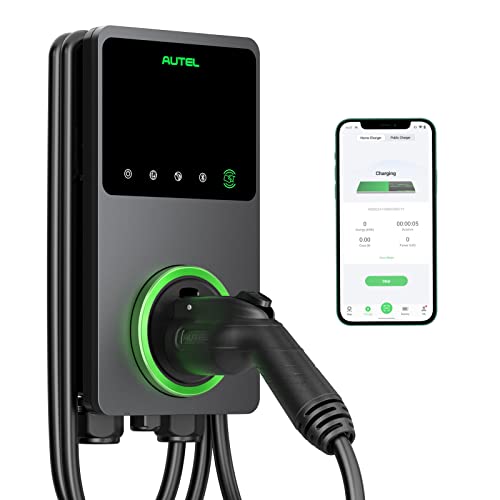
Autel
Autel MaxiCharger 50A Hardwired, 25 ft
$529.00
Twenty five feet on a 50 amp hardwired station with both Wi-Fi and Bluetooth. Long-cable installs tend to be far-corner installs, and a far corner is exactly where a single-radio charger stops talking to the house network.
- Cable
- 25 ft
- Continuous
- Up to 50 A
- Circuit
- 60 A
- Radio
- Wi-Fi and BT
Trade-off The 50 amp setting needs the same 60 amp circuit as 48 amps and delivers barely more power.
Check pricePaid links. Prices shown when researched and change without notice.
The Emporia 48A wins on reach per dollar and adds per-session energy reporting, which is what makes a time-of-use rate plan checkable. The Autel MaxiCharger 40A is the one to look at if cold is a real factor where you live, because its listing specifically describes a flexible 25 foot cable and flexibility is the property that makes a long cable pleasant rather than merely long. It is also listed for indoor or outdoor use, which matters if the mounting position that solves your geometry happens to be outside.
Ceiling: when 25 feet still does not reach
There is a point where cable length stops being the answer, and it is important to recognise it rather than keep buying cable. If the last row of the geometry table describes your garage, the correct fix is to move the charger, add a second mounting position, or use a pedestal closer to where the car parks. What follows is the hardware for the narrow band of situations where none of that is possible.
Ceiling tier: $145 to $430
One hardwired unit with a holder included, and two charging extensions that exist for situations where the charger genuinely cannot be moved.

Lectron
Lectron Nexus 48A J1772
$429.99
Hardwired only, 48 amps, UL 2594 certified with an ETL listing, and a 23 foot cable with a holder included in the box. The cleanest permanent long-cable install here, because the holder position is part of the product rather than an afterthought.
- Cable
- 23 ft
- Output
- 11.5 kW
- Circuit
- 60 A
- Cert
- UL 2594
Trade-off Two feet shorter than the 25 foot units, and there is no app at all, so no energy reporting.
Check price
SEGUMA
SEGUMA J1772 Extension Cable, 40A, 21 ft
$145.99
A 21 foot J1772 extension cable rated 40 amps. It exists for one narrow situation: a charger that is already installed, permanently, in a position that cannot be changed, serving a car it cannot reach. Read the trade-off before you consider it.
- Length
- 21 ft
- Rating
- 40 A
- Type
- J1772 extension
- Use
- Last resort
Trade-off An extension adds a second pair of connectors to the current path, and every connection pair is a place resistance and heat can develop. The listing does not state a UL or ETL mark.
Check price
SEGUMA
SEGUMA J1772 Extension Cable, 40A, 40 ft, UL Listed
$249.99
Forty feet, rated 40 amps, and UL listed, which is the one specification that separates a defensible extension from an indefensible one. If an extension is genuinely unavoidable, the listing mark is not the place to save 100 dollars.
- Length
- 40 ft
- Rating
- 40 A
- Cert
- UL listed
- Use
- Last resort
Trade-off Forty feet of heavy cable is genuinely awkward to handle and store, and it still adds a connection pair the manufacturer did not design in.
Check pricePaid links. Prices shown when researched and change without notice.
Who should not buy the ceiling tier
Almost everybody, and specifically anybody who has not yet installed the charger. An extension cable adds a second pair of connectors to a path carrying 40 amps for eight hours a night, and every connection pair is a place where contact resistance can rise and turn into heat over years of use. The manufacturer did not design that pair into the system. Before you consider one, exhaust the alternatives: a different wall, a longer branch circuit to a better mounting position, or a pedestal near the parking spot. The circuit is what costs money and moving it 15 feet during the original installation is far cheaper than solving the same problem with cable afterwards, which you can confirm with the installation cost calculator.
If an extension is genuinely unavoidable, for instance in a rental where the charger position is not yours to choose, then buy the listed one. The UL listed 40 foot extension costs more than the unlisted alternatives and the listing mark is the only part of that price that is not negotiable. The fuller argument, including when an extension is defensible and what rating to insist on, is in the extension cable roundup.
Managing 25 feet of cable so it lasts
A long cable is only an advantage if it lives off the floor. Left to itself it will be driven over, walked on, and coiled tight around the charger where the jacket bends at the same point every night. That is the mechanism behind almost every reported cable failure, and it is prevented by about thirty dollars of hardware fitted at the same time as the charger.
Cable management: $15 to $20
A holster for the connector and a few hooks for the cable run. The cheapest reliability upgrade available on this site.
Lectron
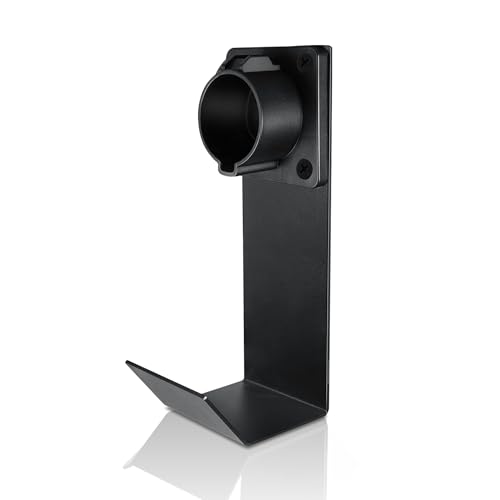
Lectron J1772 Holster and J-Hook Combo
$19.99
A holster and J-hook combination for J1772 connectors. Twenty five feet of cable is only an advantage if it lives off the floor, and the holster is what stops the connector face pointing upward where dust and water collect in it.
- Type
- Holster and hook
- Fits
- J1772
- Mount
- Wall
- Use
- Cable storage
Trade-off One holster on its own still leaves a long cable to loop, so most garages want a hook as well.
Check price
Gisafai
Metal J-Hook Cable Supports, 25 Pack
$15.99
Galvanised steel J-hooks in a 25 pack, three quarter inch. Two or three of these along the wall turn a long cable from a trip hazard into a wide, gentle arc, which is also what stops the jacket splitting at one repeated bend point.
- Quantity
- 25
- Size
- 3/4 inch
- Material
- Galvanised steel
- Use
- Cable routing
Trade-off Sized for cable support rather than for hanging a heavy connector, so use a holster for the handle itself.
Check pricePaid links. Prices shown when researched and change without notice.
The rule for placement is simple. The holster goes at the charger so the connector face points downward and does not collect dust or water. The J-hooks go along the wall so the cable runs in a wide, gentle arc rather than a tight coil, with no bend radius smaller than roughly six inches. More options for both, including retractors for very long cables, are in the cable management roundup.
How we chose these chargers
We did not test any of these units in person and we do not claim to. There is no lab here, no test garage and no sample hardware, and no tape measure has been run across a real cable for this page.
The picks come from published manufacturer specifications, listed safety certifications and verified owner reviews read in volume. Cable length was the first filter and it is taken strictly from what each product listing itself states, which is why one otherwise excellent charger is discussed above but left out of the comparison table entirely. Where a listing is silent on length, this page says so rather than estimating.
Certification was the second filter and is not negotiable: a UL 2594 listing or an ETL listing to that standard for a wall unit, and a listing mark on any extension cable, because an extension is carrying the full continuous current through connectors nobody designed as a pair. The third filter was continuous output honesty rather than peak figures, matched against the breaker the 125 percent rule requires. The fourth was failure pattern in owner reviews at volume, specifically jacket splitting near the enclosure, connectors that become stiff in cold weather and latches that fail after a few thousand cycles. Prices were accurate when researched and change without notice.
Buying tips for a long cable install
Measure with the cars parked, not with a floor plan
Park both cars exactly as they normally park, including which one goes nose in. Then run a tape from the proposed box position to each charge port and add four feet for drape. It takes ten minutes and it is the single most useful thing you can do before an electrician arrives, because the box position is the one decision that cannot be changed afterwards without paying for it twice.
Buy cable length before you buy amperage
If the choice at the same price is 25 feet at 40 amps or 16 feet at 48 amps, take the cable every time. The amperage difference is under two kilowatts on a session you sleep through. The cable difference is whether you can charge the second car without moving it first.
Mount toward the middle of the garage, not the back
The instinct is to put the charger at the far end of the bay near the panel. A position toward the middle of the side wall serves both bays and both parking directions, and it usually costs an extra ten or fifteen feet of conductor, which is the cheapest part of the whole job.
Fit the holster and the hooks on the same day
Cable management bought later never gets fitted, and the damage happens in the first winter. Order the holster and the hooks with the charger so the whole installation is done in one visit, and mount the holster before you decide the cable is too long.
Never solve reach with a household extension cord
A charging cable is a designed part of a safety system that includes a control pilot signal and a ground check, and a general-purpose extension cord is none of that. If reach is a problem, move the charger. If the charger cannot move, use a purpose-built listed charging extension and accept the trade-off knowingly.
Where to go next
If the mounting position is still open, work through charger placement in a garage before you choose a unit, because placement decides how much cable you need and cable decides which chargers are on your list. For the full shortlist without a cable-length filter, the Level 2 charger roundup covers three budgets, and the hardware that keeps a long cable alive is in cable management.
We review them on their own too, in full detail: the 25 foot Autel and the 23 foot Lectron Nexus.
Common questions
How long should an EV charger cable be?
Twenty five feet for almost any garage, and 16 feet only when the charger will be mounted within a few feet of the charge port. A 25 foot cable lets one mounting point serve both bays of a two-car garage and reaches a car parked nose in or backed in. A 16 foot cable frequently will not cross the same garage, and cable length is the specification owners regret far more often than amperage.
Is a longer charging cable slower or less efficient?
Not in any way you can measure at these lengths. The voltage drop across an extra nine feet of a manufacturer-supplied charging cable carrying 40 amps is a fraction of a volt, which is well inside normal supply variation. Voltage drop matters on the branch circuit feeding the charger, where runs are 50 to 150 feet, not on the cable hanging off it.
Can I use an extension cord with an EV charger?
A household extension cord, never. A purpose-built J1772 extension rated for the current and ideally UL listed is defensible in narrow circumstances, such as a charger that is already permanently installed in a position that cannot be changed. Understand what you are accepting: an extension adds a second pair of connectors to the current path, and every connection pair is somewhere resistance and heat can develop over years of nightly use.
Where should I mount the charger in a two-car garage?
On the wall between the two bays if there is one, at roughly waist height, positioned toward the middle of the garage rather than at the back. That single position with a 25 foot cable serves both bays and both parking directions in most garages. Park the cars the way they actually park, then run a tape measure from the proposed box position to each charge port before anything is drilled.
Do charging cables get stiff in cold weather?
Yes, noticeably. A cable carrying 40 amps has heavy conductors inside a thick jacket, and below freezing it holds whatever shape you left it in. It charges perfectly; it just fights you. The practical fix is not a different cable, it is mounting height and a holster that lets the cable hang in a wide arc, because repeatedly forcing a cold cable through the same tight bend is what eventually splits a jacket.
Is cable length more important than amperage?
For most households, yes. The step from 40 amps to 48 amps buys under two kilowatts, roughly six miles of range per hour, on a session that finishes while you are asleep either way. The step from a 16 foot cable to a 25 foot one decides whether the charger reaches the car at all. If the choice is a longer cable or a higher amperage at the same price, take the cable.
Getting your own panel and load numbers ready for an electrician? The EV Home Charging Install Planner is the paid version of these pages: 8 printable worksheets you fill in with your own numbers, plus the full PDF, $29.
How this page was researched
Specifications come from manufacturer documentation, listed safety certifications and verified owner reviews. We do not perform hands-on product testing and never claim to. Figures are researched planning information, not professional electrical advice. Last reviewed 2026-08-17.