Enclosure Ratings Chart
Short answer
An EV charger on an exposed exterior wall needs NEMA 4 or an IP65 equivalent. NEMA 3R is the minimum for a sheltered wall under an eave and protects against falling rain only. NEMA 4X adds corrosion resistance for coastal or salted environments. NEMA 6P is submersion rated and is more than any home charger needs.
Enclosure rating is the specification that decides how long an outdoor charger lasts, and it is the one most often reduced to the word "waterproof" in a product listing. Waterproof is not a rating. NEMA 3R, NEMA 4, NEMA 4X and the IP codes are ratings, they describe specific tested conditions, and the difference between two of them is the difference between an enclosure that survives a decade on a wall and one that fills with water in its second winter.
Best enclosure for an outdoor install
Best enclosure at the priceGrizzl-E
Grizzl-E Classic 40A
$299.99
A sealed metal enclosure rated for indoor or outdoor mounting, with no network stack inside it to be affected by condensation or by a discontinued cloud service. On an exterior wall or in a detached garage, enclosure and simplicity matter more than amperage, and this unit is built around both.
- Mounting
- Indoor or outdoor
- Case
- Metal
- Output
- 9.6 kW
- Circuit
- 50 A
- Cert
- UL
- Connectivity
- None
Paid link. Price shown when researched.
The ratings, and what each one promises
| Rating | Protects against | IP equivalent | Verdict for a home charger |
|---|---|---|---|
| NEMA 3R | Falling rain, sleet, external ice | IP24 equivalent | The minimum for a wall under an eave. Not for direct spray. |
| NEMA 4 | Windblown dust, rain, splashing and hose-directed water | IP66 equivalent | What you want on an exposed exterior wall or a pedestal. |
| NEMA 4X | Everything in 4 plus corrosion | IP66 equivalent | Coastal salt air, or anywhere de-icing salt gets airborne. |
| NEMA 6P | Prolonged submersion | IP67 equivalent | More than a home charger needs. Not a reason to pay extra. |
| IP54 | Dust and splashing water | IP54 | Common on imported units. Treat as sheltered mounting only. |
| IP65 | Dust tight, low pressure jets | IP65 | Reasonable for outdoor mounting on most walls. |
The two ratings worth understanding properly are 3R and 4, because almost every outdoor home charger claims one of them. NEMA 3R is a rain rating: it assumes water falls from above and runs down the outside. NEMA 4 assumes water arrives from any direction under pressure, which is what a storm with wind actually does and what a hose does when you wash the car. That is the gap that decides most real installations.
Which rating your mounting position needs
Ratings are easier to choose when they are attached to a place rather than to a specification sheet. Find your situation in the left column.
| Mounting position | Sensible minimum | Why |
|---|---|---|
| Inside an attached, dry garage | Indoor rated | Almost any listed unit is fine. Spend the money on cable length instead. |
| Inside an unheated or damp garage | NEMA 3R or IP54 | Condensation is the issue, not rain. A sealed enclosure resists the daily temperature swing. |
| Exterior wall under a deep eave | NEMA 3R | Falling rain only. Wind-driven rain still reaches a surprising distance under an eave. |
| Exposed exterior wall | NEMA 4 or IP65 | Windblown dust and hose-directed water. This is the honest minimum for an unsheltered wall. |
| Carport or open pedestal | NEMA 4 | Splash from the ground matters as much as rain from above. |
| Coastal, or where road salt is airborne | NEMA 4X | Corrosion resistance is a separate property from water ingress and you need both. |
| Detached garage with no climate control | NEMA 3R minimum, 4 preferred | Long unattended periods and wide temperature swings argue for the better enclosure. |
The row people underestimate is the second one. An unheated garage in a humid climate is not a dry location in any meaningful sense: every time the temperature crosses the dew point, moisture condenses on the coldest surfaces available, which frequently includes the inside of an electrical enclosure. Water that forms inside a box is worse than water that runs off the outside of one, and it is the reason a sealed enclosure is worth having somewhere it never rains.
How to read an IP code
IP ratings are two digits. The first describes protection against solid objects and dust, the second against liquids, and a higher number in either position includes everything below it. IP65 therefore means dust tight and protected against water jets.
| Digit | First position: solids | Second position: liquids |
|---|---|---|
| 0 | No protection | No protection |
| 1 | Objects over 50 mm | Dripping water, vertical |
| 2 | Objects over 12.5 mm | Dripping water, tilted 15 degrees |
| 3 | Objects over 2.5 mm | Spraying water |
| 4 | Objects over 1 mm | Splashing water |
| 5 | Dust protected | Water jets |
| 6 | Dust tight | Powerful water jets |
| 7 | Not applicable | Temporary immersion |
| 8 | Not applicable | Continuous immersion |
Two traps in reading IP codes for outdoor equipment. First, immersion ratings are not a superset of jet ratings: a device rated for temporary immersion has not necessarily been evaluated against pressurised jets, which is why some products state two codes. Second, an IP code says nothing about corrosion or ice, both of which the NEMA system addresses. For a charger that lives outside in a salted or coastal environment, a NEMA 4X claim tells you something an IP65 claim does not.
What the rating does not cover
Sunlight
No enclosure rating describes ultraviolet exposure or heat gain, and both matter. Direct afternoon sun raises the internal temperature of any enclosure, and chargers reduce their output when internal temperatures rise, which shows up to the owner as unexplained slow charging on hot days. Ultraviolet also degrades plastics and cable jackets over years. Shade solves both, and it is free if you mount thoughtfully.
Cold
Enclosure ratings say nothing about the cable, and in cold climates the cable is the component owners complain about. A jacket that goes rigid below freezing is difficult to route and easy to damage, and it is the single most common winter complaint in owner reviews of budget units. Manufacturers who have solved it publish a minimum operating temperature for the cable, which is a specification worth looking for.
Impact and theft
A metal enclosure resists a stray trolley, a bicycle or a reversing bumper in a way a moulded plastic one does not, and no rating captures that. On a driveway or a public-facing wall, physical robustness and a lockable arrangement are separate considerations from water ingress.
The installation itself
A rated enclosure with an unsealed entry is not a rated installation. Conduit entries, the flexible whip into the charger body and the direction the fittings face all decide whether water can enter, and a listed-and-installed-correctly unit is a different thing from a listed unit. This is exactly the sort of detail that separates a good install from a cheap one, and it is covered in outdoor EV charger installation and conduit for an EV charger circuit.
Hardware for an outdoor installation
A tough enclosure, the in-use cover a receptacle install requires, and the pedestal that changes the exposure category entirely.
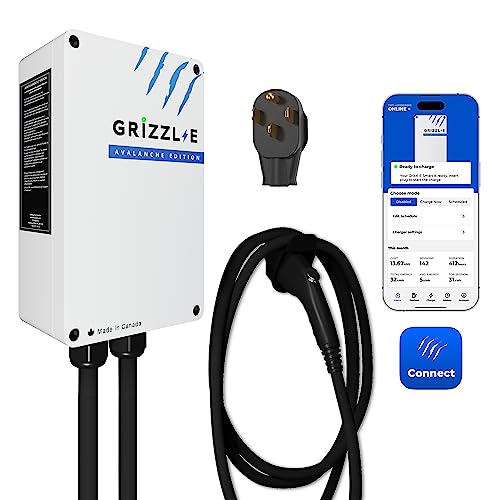
Grizzl-E
Grizzl-E Classic Connect 40A
$349.99
The same metal enclosure with connectivity added, for an outdoor or detached installation where you still want session energy reporting. Enclosure first, radio second, which is the right order for a unit that lives outside.
- Mounting
- Indoor or outdoor
- Case
- Metal
- Output
- 9.6 kW
- Smart
- Wi-Fi
Trade-off A network stack in an unconditioned space is one more thing that dislikes condensation.
Check price
TayMac
TayMac MX3300 Metal Weatherproof In-Use Cover
$16.29
An extra duty metal in-use cover for an outdoor receptacle. A damp location receptacle must have a cover that closes over the plug while it is inserted, and extra duty is the rating that survives a heavy cord hanging from it.
- Type
- In-use cover
- Material
- Metal
- Duty
- Extra duty
- Gangs
- 1
Trade-off Check the box opening before ordering, since 14-50 boxes vary.
Check price
lukar
lukar EV Charger Pedestal with Roof
$113.99
A pedestal with a roof and side protection, which changes the exposure category of the whole installation. Shade also keeps the unit cooler on hot afternoons, and a cooler charger derates less.
- Type
- Pedestal
- Roof
- Yes
- Sides
- Protected
- Mount
- Floor
Trade-off Needs a proper base and a conduit feed, so it belongs in the install plan.
Check pricePaid links. Prices shown when researched and change without notice.
Enclosure versus everything else in the budget
If the charger is going outdoors, enclosure quality should outrank connectivity, brand and amperage in your priority list, because it is the property that decides whether the unit is still working in ten years. It should not outrank cable length, which remains the specification owners regret most, or the panel capacity that decides whether the circuit is possible at all.
A useful way to think about the trade: an enclosure upgrade typically costs fifty to a hundred dollars between comparable units, an in-use cover is under twenty, and a pedestal with a roof is around a hundred. All three are small next to the labour line on the installation, which on most home charger jobs is the largest single cost. Spending a hundred dollars to avoid replacing a charger is straightforwardly good value; spending three hundred on a submersion rating is not.
How this chart was researched
Enclosure rating definitions are summarised from the published NEMA enclosure type descriptions and the IP code structure defined in the relevant international standard, and are reproduced here in plain language for planning rather than as a substitute for the standards themselves. Product ratings come from manufacturer documentation and listed certifications. We do not perform hands-on product testing, do not conduct ingress testing, and never claim to.
A manufacturer's claim of a rating is a claim about a tested configuration. Where a listing states a rating without naming a certifying body or a listing standard, treat it as marketing rather than as an evaluation. Everything here is researched planning information rather than professional electrical advice.
Where to go next
The units that actually carry outdoor ratings are compared in best outdoor EV chargers, and the mounting question is covered in charger placement. For a detached structure, start with detached garage EV charger, and for the whole priced install see the buildouts.
Common questions
What NEMA rating does an outdoor EV charger need?
NEMA 4 or an IP65 equivalent for a genuinely exposed exterior wall, and NEMA 3R as an absolute minimum for a wall under a deep eave. NEMA 3R protects against falling rain, sleet and external ice formation. NEMA 4 adds windblown dust and hose-directed water, which is what an unsheltered wall actually experiences during a storm. If salt air or airborne de-icing salt is a factor, step to NEMA 4X, which adds corrosion resistance.
What is the difference between NEMA 4 and NEMA 4X?
They protect against the same water and dust conditions. The X adds corrosion resistance, which is a materials property rather than a sealing property, and it matters near the coast, near a road that is salted in winter, or anywhere else corrosive material becomes airborne. If you can see rust forming on outdoor hardware within a couple of years, you are in 4X territory.
Is IP65 the same as NEMA 4?
Roughly equivalent for water and dust, and not identical. IP codes describe two things: a first digit for solids and a second for liquids. NEMA ratings cover the same ground and also address corrosion, icing, and in some ratings the construction of the enclosure itself. A NEMA rating can generally be mapped onto an IP equivalent, but an IP rating cannot be mapped back with confidence because it says nothing about corrosion or ice.
Do I need NEMA 6P for a home charger?
No. NEMA 6P describes protection against prolonged submersion, which is not a condition a wall-mounted or pedestal-mounted home charger encounters. It is not a reason to pay extra, and a product marketed on that rating is answering a question nobody asked. Spend the difference on cable length, on an enclosure with corrosion resistance if you are near the coast, or on a better mounting position.
Does a charger in a garage need an outdoor rating?
Not for rain, but a garage is not automatically a dry location. An unheated garage in a humid climate cycles through condensation every time the temperature crosses the dew point, and water that condenses inside an enclosure is more damaging than water that runs off the outside of one. A sealed enclosure and an indoor or outdoor rating are worth having in an unconditioned space even though it never rains on the unit.
Does a higher enclosure rating mean the charger runs hotter?
A more sealed enclosure has fewer paths for heat to escape, so manufacturers design for it, and any listed unit is tested at its rated output in its rated enclosure. What genuinely does cause derating is direct sun on a hot day, which is why shade from an eave, a roof or a pedestal cover is worth more than the rating difference between two similar units.
Getting your own panel and load numbers ready for an electrician? The EV Home Charging Install Planner is the paid version of these pages: 8 printable worksheets you fill in with your own numbers, plus the full PDF, $29.
How this page was researched
Specifications come from manufacturer documentation, listed safety certifications and verified owner reviews. We do not perform hands-on product testing and never claim to. Figures are researched planning information, not professional electrical advice. Last reviewed 2026-08-17.