Best Outdoor EV Chargers
Short answer
The best outdoor EV charger is the Grizzl-E Classic 40A at around $299.99, a UL certified metal-cased unit listed for indoor or outdoor mounting that delivers 9.6 kW on a 50 amp circuit. On a sheltered wall NEMA 3R is the minimum; on a fully exposed wall or a pedestal buy NEMA 4 or better, and hardwire it rather than feeding it from a receptacle.
The best outdoor EV charger is the Grizzl-E Classic 40A at around $299.99. It is UL certified, the case is metal rather than moulded plastic, it is listed for indoor or outdoor mounting, and there is no cloud service inside it that can be switched off while the hardware still works. If you want 48 amps and per-session energy reporting on a wall that has an eave over it, the Emporia 48A hardwired at around $449 is the better buy.
Outdoors, the specification that decides how long a charger lasts is not amperage. It is the enclosure rating, the cable jacket and whether there is a plug face anywhere in the weather path. A unit that will run for fifteen years on a garage wall can fail in three on a south-facing exterior wall in a freeze and thaw climate, and it will not fail because of anything to do with charging. It will fail because water got in through a fitting installed pointing upward, or because ultraviolet light turned the enclosure chalky and brittle, or because somebody forced a frozen cable through the same bend four hundred times.
Top pick, outdoor EV charger
Best for exposed wallsGrizzl-E
Grizzl-E Classic 40A
$299.99
A metal case listed for indoor or outdoor mounting, with no app, no firmware and no cloud service to lose. Outdoors the failure modes are water, ultraviolet light, freeze cycles and impact, and a metal box carrying a UL certification answers all four better than any moulded plastic enclosure at the price.
- Output
- 9.6 kW
- Continuous
- 40 A
- Circuit
- 50 A
- Case
- Metal
- Cert
- UL certified
- Mounting
- Indoor or outdoor
Paid link. Price shown when researched.
What do the enclosure ratings actually promise?
Enclosure ratings are the one specification on an outdoor charger that is genuinely standardised, and almost nobody reads them properly. They are not a quality ranking. Each rating describes a specific list of things the enclosure was tested to keep out, and a higher number is not automatically better for a house wall. Paying for submersion protection on a charger bolted to a wall six feet off the ground buys you nothing at all.
| Rating | What it keeps out | IP equivalent | Where it belongs |
|---|---|---|---|
| NEMA 3R | Falling rain, sleet, external ice | IP24 equivalent | The minimum for a wall under an eave. Not for direct spray. |
| NEMA 4 | Windblown dust, rain, splashing and hose-directed water | IP66 equivalent | What you want on an exposed exterior wall or a pedestal. |
| NEMA 4X | Everything in 4 plus corrosion | IP66 equivalent | Coastal salt air, or anywhere de-icing salt gets airborne. |
| NEMA 6P | Prolonged submersion | IP67 equivalent | More than a home charger needs. Not a reason to pay extra. |
| IP54 | Dust and splashing water | IP54 | Common on imported units. Treat as sheltered mounting only. |
| IP65 | Dust tight, low pressure jets | IP65 | Reasonable for outdoor mounting on most walls. |
The line that matters for most houses runs between the first two rows. NEMA 3R is rain, sleet and ice falling from above, which is what happens under an eave. It is not tested against water arriving sideways, which is what happens on an exposed wall in wind, and it is not tested against a hose, which is what happens when you wash the car. NEMA 4 is, and that is the rating to buy for a wall with nothing over it or for anything on a pedestal.
NEMA 4X adds corrosion resistance and is a genuine requirement rather than an upsell in two situations: within a few miles of salt water, and anywhere road salt becomes airborne in winter, which includes most of the northern half of the country if the charger faces a road. The full chart with the IP crosswalk lives at the enclosure ratings chart if you need to compare a manufacturer that publishes IP figures against one that publishes NEMA figures.
One caution about imported units that advertise IP54 or IP65. IP54 is dust and splashing only, and should be read as sheltered mounting, whatever the listing photograph shows. IP65 is reasonable for a normal wall. Neither is interchangeable with NEMA 4, because the test methods differ, and where a unit publishes only an IP figure the honest reading is the more conservative one.
What actually kills an outdoor charger?
Five failure modes account for nearly all of it, and only one of them is water. They are worth reading in order, because the cheapest ones to prevent are at the bottom of the list and the ones people worry about are at the top.
| Failure mode | What causes it | What prevents it |
|---|---|---|
| Water in the enclosure | A wall-mounted unit rated only for sheltered use, or an entry fitting installed pointing upward | NEMA 4 or better on an exposed wall, plus liquid-tight conduit entering from below |
| Ultraviolet degradation | Moulded plastic enclosure and cable jacket in direct sun for years | Metal case, a north or east wall, an eave, or a pedestal with a roof |
| Cable jacket failure | Repeatedly bending a stiff cold cable at the same point, and dragging it over concrete | A holster at the right height so the cable hangs in an arc, and a cold-rated jacket |
| Plug face heating | A receptacle-fed install where contact resistance rises with wear and weather | Hardwire it, or use an EV-rated receptacle in a listed box with an extra-duty in-use cover |
| Theft or tampering | A visible, unlocked, kerbside charger with a valuable copper cable on it | A lockable in-use cover, a locking holster, and mounting out of sight of the street |
Ultraviolet damage is the one people underestimate. A moulded polycarbonate enclosure on a wall that takes full afternoon sun for a decade goes chalky, then brittle, and then a gasket seat that used to seal stops sealing, at which point the water failure everybody worried about finally happens for a reason nobody was watching. That is the single strongest argument for a metal case on an exposed wall, and the reason a pedestal with a roof is not a decorative feature.
Cable behaviour in cold weather is the one owners complain about most. A 40 amp charging cable carries heavy conductors inside a thick jacket, and below freezing it holds whatever shape you left it in. It still charges perfectly. It simply becomes an object you wrestle with, and the wrestling concentrates bending stress at one point near the enclosure. The fix is not a different cable, it is mounting height and a holster that lets the cable hang in a wide arc rather than a tight coil. The geometry is worked through in charger placement, and the hardware is in cable management.
Why does hardwiring win outdoors?
Indoors, hardwired against plug-in is a genuine trade with arguments on both sides. Outdoors it is lopsided, and the reason is that a receptacle-fed installation puts a mechanical connection carrying 40 amps for eight hours a night into the weather. Contact resistance at a plug face rises as the contacts wear, and rising contact resistance turns into heat. Add freeze and thaw cycles, add the corrosion that comes with condensation inside a box, add somebody unplugging and replugging it in the wet, and you have the most likely failure point in the whole installation sitting in the worst possible location for it.
Hardwiring deletes that component. The branch circuit lands in the charger's own enclosure or in a junction immediately behind it, usually through a short liquid-tight whip so the unit can still be removed for service. There is no plug, no cover, no cover latch and no cover gasket. Above 40 amps continuous the decision is made for you anyway, because a NEMA 14-50 receptacle tops out at 40 amps continuous under the 125 percent rule, so every 48 amp station is hardwired by design.
If a receptacle is unavoidable, because you are renting or because you want to take the charger when you move, then three things are not optional: a receptacle sold for EV duty rather than a cheap general-purpose one, a listed weather-resistant box, and an extra-duty in-use cover that closes over the plug while it is inserted. The full argument for each path is in hardwired versus plug-in.
Sheltered: a wall with something over it
Most outdoor charger installations are actually sheltered installations. A wall under an eave, inside a carport, or beneath a first-floor overhang sees falling rain and almost no lateral water, which means NEMA 3R hardware is genuinely appropriate and you can spend the money on output and cable length instead of enclosure rating.
Sheltered tier: $299 to $449
For a wall with an eave, a carport or an overhang. Two metal-cased 40 amp units and the value pick at 48 amps.
Grizzl-E
Grizzl-E Classic 40A
$299.99
The default outdoor unit. A metal case, a UL certification, an indoor or outdoor listing, and deliberately no app, so there is no radio to lose behind a stucco wall and no cloud account to be discontinued in four years. Forty amps on a 50 amp circuit gives 9.6 kW.
- Output
- 9.6 kW
- Circuit
- 50 A
- Case
- Metal
- Cert
- UL certified
Trade-off No scheduling and no energy reporting, so a time-of-use rate plan is managed from the car instead.
Check price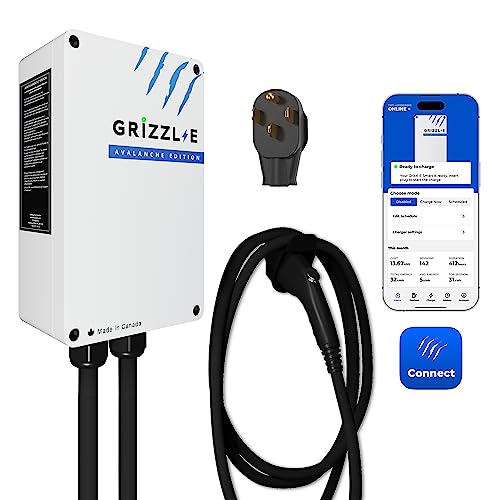
Grizzl-E
Grizzl-E Classic Connect 40A
$349.99
The same metal-cased 40 amp hardware with connectivity added, which matters outdoors for one reason that has nothing to do with convenience: you can see from indoors whether the unit is charging without walking out in the weather to look at it.
- Output
- 9.6 kW
- Circuit
- 50 A
- Case
- Metal
- Smart
- Wi-Fi
Trade-off Fifty dollars more than the Classic for software, and a garage-wall radio still has to reach your router.
Check price
EMPORIA
Emporia Level 2 EV Charger, 48A J1772
$449.00
Hardwired 48 amps with a factory whip, a 25 foot cable and Wi-Fi with per-session energy reporting. The value pick for a sheltered exterior wall where you want 11.5 kW and a record of what it cost you.
- Output
- 11.5 kW
- Circuit
- 60 A
- Cable
- 25 ft
- Install
- Hardwired
Trade-off A moulded enclosure rather than metal, so it wants an eave or an overhang rather than a fully exposed south wall.
Check pricePaid links. Prices shown when researched and change without notice.
The Grizzl-E Classic is the pick in this tier and on the page, because a metal case solves the ultraviolet problem permanently and the absence of an app removes the second most common long-term complaint about outdoor chargers, which is a radio that cannot hold a connection through an exterior wall. If you want the app anyway, the Grizzl-E Classic Connect is the same box with connectivity added for about fifty dollars.
Buy once: a fully exposed wall
On a wall with nothing above it, in wind-driven rain, in snow that drifts against the house, the enclosure rating stops being a specification and becomes the whole purchase. This tier is hardwired 48 to 50 amp stations, which is also where the app quality question gets sharper, because a charger you cannot see from indoors is one you would rather diagnose from a phone.
Buy-once tier: $494 to $700
Hardwired 48 to 50 amp stations for exposed mounting. All three deliver 11.5 kW or a shade more on the same 60 amp circuit.

ChargePoint
ChargePoint HomeFlex, Hardwired 50A
$494.00
Adjustable up to 50 amps, hardwired, with the most mature app in the category and the deepest integration with utility rebate and demand-response programs. The unit to buy when the charger is outdoors and you would rather diagnose it from a phone than from a stepladder in the rain.
- Continuous
- Up to 50 A
- Circuit
- 60 A
- Smart
- Connected app
- Install
- Hardwired
Trade-off You pay a premium for software on hardware that charges at exactly the same speed as the Emporia.
Check price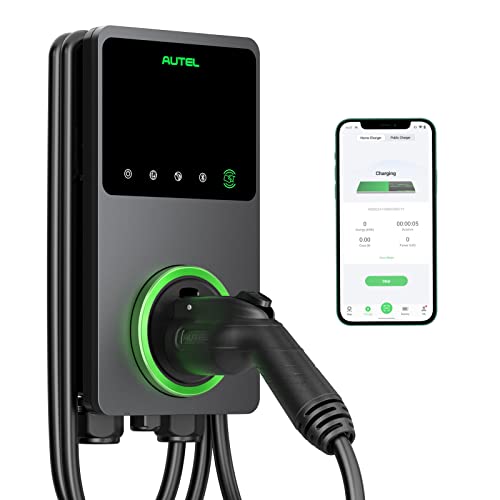
Autel
Autel MaxiCharger 50A Hardwired, 25 ft
$529.00
A 50 amp hardwired station with a 25 foot cable and both Wi-Fi and Bluetooth. The second radio is the reason it is here: an exterior wall or a detached garage is the worst possible place for a Wi-Fi client, and Bluetooth keeps the unit configurable when the network does not reach.
- Continuous
- Up to 50 A
- Circuit
- 60 A
- Cable
- 25 ft
- Radio
- Wi-Fi and BT
Trade-off The 50 amp setting needs the same 60 amp circuit as 48 amps and delivers barely more power.
Check price
Wallbox
Wallbox Pulsar Plus 48A
$699.99
A 48 amp J1772 station built around one of the smaller enclosures in this class, which is worth real money on a narrow exterior wall or beside a doorway where a large box will be knocked. It delivers 11.5 kW on a 60 amp circuit like everything else in this tier.
- Output
- 11.5 kW
- Continuous
- 48 A
- Circuit
- 60 A
- Connector
- J1772
Trade-off The most expensive unit in the tier and it charges no faster than the other two on the same circuit.
Check pricePaid links. Prices shown when researched and change without notice.
Be blunt about what separates these three, because it is not charging speed. On a 60 amp circuit they are identical in kilowatts. What differs is the app, the radio and the enclosure footprint. ChargePoint HomeFlex has the deepest utility program integration, which matters if a rebate in your area requires a participating charger. The Autel MaxiCharger 50A carries Bluetooth as well as Wi-Fi, and on an exterior wall or in a detached garage that redundancy is worth more than it sounds. The Wallbox Pulsar Plus 48A is built around a notably small enclosure, which is a real advantage beside a doorway or on a narrow pier.
Ceiling: no wall at all, and the 80 amp case
The top tier splits into two unrelated problems. The first is a driveway or carport with no wall within reach of any cable, which is solved by a pedestal rather than by hardware. The second is the small number of vehicles that can actually use more than 11.5 kW.
Ceiling tier: $119 to $899
Freestanding mounts for a driveway with no wall, and the 80 amp unit that almost nobody should buy.

Grizzl-E
Grizzl-E Ultimate 80A
$899.00
An 80 amp metal-cased unit delivering 19.2 kW on a 100 amp branch circuit, rated for outdoor mounting. Genuinely the fastest alternating-current charging available at a house, and relevant to almost nobody.
- Output
- 19.2 kW
- Continuous
- 80 A
- Circuit
- 100 A
- Case
- Metal
Trade-off A 100 amp branch circuit is half a typical 200 amp service, so this usually forces a service upgrade.
Check price
Maizengauto
Maizengauto EV Charger Pedestal
$129.99
A galvanised freestanding pedestal for a driveway or carport with no wall in reach. Mounting the unit on its own post next to where the car actually parks frequently solves a reach problem that no amount of cable length would have solved.
- Type
- Pedestal
- Finish
- Galvanised
- Use
- Driveway or carport
- Charger
- Sold separately
Trade-off A pedestal needs its own conduit run, a footing and usually a trench, which is a bigger job than a wall mount.
Check price
Ufixed
Ufixed Weatherproof Pedestal with Roof
$119.99
A weatherproof pedestal with a top cover, listed for Tesla Gen 3 charging stations and the Tesla Mobile Connector. The roof is the detail that matters in snow and strong sun: it takes ultraviolet load off the enclosure and keeps meltwater off the connector face when the charger is idle.
- Type
- Pedestal
- Cover
- Roof
- Fits
- Tesla Gen 3
- Charger
- Sold separately
Trade-off The listing names Tesla hardware specifically, so confirm your unit and mounting pattern fit before ordering.
Check pricePaid links. Prices shown when researched and change without notice.
Who should not buy the ceiling tier
Do not buy the Grizzl-E Ultimate 80A unless you own a Ford F-150 Lightning with the equipment to accept 19.2 kW. That is very close to the complete list of vehicles that can use the output. Every other car draws 11.5 kW or less from it, which is exactly what a 449 dollar unit delivers on a 60 amp circuit, while the 100 amp branch circuit it requires consumes half a typical 200 amp residential service and will usually force a service upgrade costing three to seven thousand dollars.
Skip the pedestals too if there is any usable wall, pier or post within about twenty feet of where the car parks. A pedestal is not just a stand: it needs a footing, its own conduit run and normally a trench, which turns a half-day wall mount into a multi-day project. The cases where it is the right answer are genuinely common though, particularly detached garages and driveways parallel to the house, and the options are compared in the pedestal roundup. If the charger is going to a detached structure, read detached garage EV charger first, because feeder sizing and the separate grounding rules change the parts list before any charger is chosen.
The install side: what goes around the charger
An outdoor installation has a parts list that an indoor one does not, and it is worth knowing before the quote arrives so you can tell a thorough electrician from a fast one. Liquid-tight flexible conduit for the whip and any exposed run, fittings that enter the enclosure from below rather than above, an extra-duty in-use cover if there is a receptacle anywhere, and a weather-resistant receptacle rather than a standard one if you are going the plug-in route.
Install side: covers, boxes and conduit, $16 to $45
The parts that make an outdoor charger an outdoor installation. Cheap individually and the reason cheap installs fail.

TayMac
TayMac MX3300 Metal Weatherproof In-Use Cover
$16.29
A metal extra-duty in-use cover. If a receptacle is any part of an outdoor installation, an in-use cover that closes over the plug while it is inserted is required rather than optional, and a metal one survives being stood on and frozen.
- Type
- In-use cover
- Material
- Metal
- Rating
- Extra duty
- Gangs
- 1
Trade-off Deep covers stand off the wall and can foul a large moulded plug body, so check the plug fits closed.
Check price
Sealproof
Sealproof Extra Duty In-Use Outdoor Cover
$16.99
A lockable polycarbonate extra-duty in-use cover with multiple configurations. The lock is the point: an unsecured outdoor receptacle is an invitation, and a padlocked cover is the cheapest theft deterrent in the whole project.
- Type
- In-use cover
- Lockable
- Yes
- Rating
- Extra duty
- Material
- Polycarbonate
Trade-off Polycarbonate ages under ultraviolet light faster than metal on a wall in full sun.
Check price
Suplevel
Suplevel NEMA 14-50R Outlet Box, ETL Listed
$44.99
An ETL listed outdoor power outlet box with a NEMA 14-50 receptacle already fitted, which replaces a box, a receptacle, a cover and the labour of assembling all three into something weather resistant.
- Receptacle
- 14-50R
- Cert
- ETL listed
- Use
- Outdoor
- Continuous
- 40 A
Trade-off Still a receptacle, so it keeps the plug face that a hardwired install removes entirely.
Check price
Wocloer
3/4 inch Liquid-Tight Flexible Conduit, 25 ft
$26.79
Liquid-tight flexible conduit with fittings, which is what the last few feet into an outdoor charger should be made of. It lets the unit be removed for service without disturbing the fixed wiring and it keeps water out of the run.
- Size
- 3/4 inch
- Length
- 25 ft
- Type
- Non-metallic
- Use
- Whip and exposed runs
Trade-off Sizing depends on conductor count and fill, so let the electrician confirm the diameter.
Check pricePaid links. Prices shown when researched and change without notice.
The in-use cover deserves a sentence of its own. Outdoors, a receptacle needs a cover that closes over the plug while the plug is inserted, not one that only closes when the receptacle is empty, and it needs to be an extra-duty type. The TayMac metal in-use cover survives weather and boots better than plastic; the Sealproof lockable cover trades some of that for a padlock hasp, which is the cheapest theft deterrent available. The receptacle itself should be an EV-rated device, and the reasons are set out in the receptacle roundup.
How we chose these chargers
We did not test any of these units in person and we do not claim to. There is no lab here, no weather chamber, no instrumented driveway and no sample hardware. On a page about weather exposure that claim would be easy to write and impossible to defend.
The picks come from published manufacturer specifications, listed safety certifications and verified owner reviews read in volume. Certification was the first filter and it is not negotiable: a UL 2594 listing or an ETL listing to that standard, plus an explicit outdoor or wet-location rating on the unit itself. A charger that is merely described as weatherproof in marketing copy, with no enclosure rating on the label, did not make the list.
The second filter was the enclosure and the case material, because on this page they are the product. The third was cable length and jacket quality, since an outdoor charger reaches further than a garage one and its cable lives a harder life. The fourth was failure pattern in owner reviews at volume, specifically reports of water ingress, enclosures cracking or fading, connectors that seize in cold weather and ground-fault nuisance tripping in wet conditions, all of which show up as patterns even though single reviews are unreliable. Prices were accurate when researched and change without notice.
Buying tips for an outdoor charger
Match the rating to the exact wall, not to the word outdoors
Stand where the charger will go and look up. If there is an eave, an overhang or a carport roof above it, NEMA 3R hardware is appropriate and you can spend elsewhere. If there is open sky, buy NEMA 4 or better. If you can smell salt or see winter road spray reach that wall, buy 4X. The rating is cheap at purchase and impossible to add later.
Mount it out of the sun as well as out of the rain
Ultraviolet exposure is the slow failure nobody plans for. Between two otherwise equal walls, choose the north or east one. If the only available wall faces the afternoon sun and you are buying a moulded enclosure, add a small roof or accept that you are on a ten year clock rather than a twenty year one.
Insist the conduit enters from below
Water follows conduit. A fitting that enters the top of an enclosure is a funnel, and it is one of the most common findings on a failed outdoor install. Entries should come in from the bottom or the back, and exposed runs should be liquid-tight rather than standard flexible conduit. This is a reasonable thing to ask about when you compare quotes.
Plan the cable arc before you pick the height
Outdoors the cable will be cold, stiff and heavy, and it must not rest on the ground where it will be driven over and where meltwater will pool around the connector. Mount the unit so the connector hangs at roughly waist height with a wide loop, and fit a holster rather than a bare hook so the connector face points downward and stays dry.
Budget for the trench, not the box
If the charger is going anywhere other than the wall of the house that already contains the panel, the dominant cost is getting power there. A detached garage or a pedestal with trenching starts around 2,500 dollars and can pass 6,000, which is five to twenty times the price of the charger. Price the whole job through the installation cost calculator before you choose a unit, because the answer sometimes moves the charger to a different wall.
Where to go next
The step-by-step version of this project, including permits, wet-location fittings and the inspection details, is in outdoor EV charger installation. If the charger is going to a detached structure, start instead with detached garage EV charger, and if there is no wall at all in reach, compare mounts in the pedestal roundup.
We review them on their own too, in full detail: the NEMA 4X Autel MaxiCharger, the IP66 EVIQO and the Grizzl-E Classic.
Common questions
What NEMA rating does an outdoor EV charger need?
NEMA 3R is the practical minimum and it only covers falling rain, sleet and ice, so it belongs on a wall that is under an eave or an overhang. On a fully exposed wall or a pedestal you want NEMA 4, which adds windblown dust, splashing and hose-directed water, roughly IP66. NEMA 4X adds corrosion resistance and is worth the money within a few miles of salt water or where de-icing salt gets airborne.
Can I mount any EV charger outside?
No. The unit has to be listed for outdoor use, and most are, but plenty of low-cost portables are not. Check the enclosure rating on the rating label rather than the marketing copy, and check the ambient temperature range as well, because some units derate or refuse to start below a stated temperature. Mounting an indoor-rated unit outside voids the warranty and the listing at the same time.
Do EV charging cables get stiff in the cold?
Yes, noticeably. A charging cable carrying 40 amps has a thick jacket over heavy conductors, and below freezing that jacket stiffens enough to hold whatever shape it was left in. It still works, but it fights you, and repeatedly forcing a cold cable through the same tight bend is what eventually splits a jacket. Mount the holster so the cable hangs in a wide arc rather than a tight loop.
Should an outdoor charger be hardwired or plugged in?
Hardwired, if the choice is open. A receptacle outdoors adds a plug face, a box and an in-use cover to the weather path, and the plug face is already the most common failure point in a home charging installation before you add rain and freeze cycles to it. Hardwiring removes that component entirely. It also removes your ability to swap a failed unit yourself, which is the trade you are making.
Do I need GFCI protection for an outdoor EV charger?
Frequently yes for a receptacle-fed outdoor installation, and it depends on the unit and the code cycle your jurisdiction has adopted for a hardwired one, because many hardwired chargers contain listed ground-fault protection internally. Doubling up can cause nuisance tripping. This is exactly the detail that varies locally, so it belongs to your electrician and your inspector.
How do I stop somebody stealing or using my outdoor charger?
Three cheap measures cover most of it. Fit a lockable extra-duty in-use cover if there is a receptacle, use a holster that retains the connector rather than a bare hook, and mount the unit out of line of sight from the street. Smart units add a software layer, since most can require authorisation before they will deliver current, which makes an unauthorised session pointless.
Getting your own panel and load numbers ready for an electrician? The EV Home Charging Install Planner is the paid version of these pages: 8 printable worksheets you fill in with your own numbers, plus the full PDF, $29.
How this page was researched
Specifications come from manufacturer documentation, listed safety certifications and verified owner reviews. We do not perform hands-on product testing and never claim to. Figures are researched planning information, not professional electrical advice. Last reviewed 2026-08-17.