Best EV Charger Pedestals
Short answer
The best EV charger pedestal for most driveways is the Maizengauto galvanised freestanding stand at around $129.99. A pedestal solves a reach problem, not a weather problem: the real cost is the underground feeder, the concrete base and the conduit transition out of the ground, which typically runs $2,500 to $6,500 for a detached location.
The best EV charger pedestal for most driveways is the Maizengauto galvanised freestanding stand at around $129.99, because it is a galvanised, corrosion-resistant post built for outdoor use and it adds nothing to the electrical circuit. If your post will stand in the open with no eave or carport roof above it, buy the lukar pedestal with roof and side protection at around $113.99 instead.
Now the framing that matters, because it changes what you should be shopping for. A pedestal is a solution to geometry, not to weather. You buy one when there is no wall within cable reach of the charge port: a detached carport, a driveway with parking in the open, a garage where the panel is on the wrong side of the building, or a house where the only suitable wall faces the street. The pedestal itself is a hundred-dollar piece of steel. The project is the underground feeder, the concrete base, the trench and the conduit transition out of the ground, and that is where the two thousand dollars goes. Price the whole job through the installation cost calculator before you choose a post.
Top pick, freestanding charger pedestal
Best for most driveways
Maizengauto
Maizengauto EV Charger Pedestal
$129.99
A galvanised freestanding post with a corrosion-resistant finish, at a price that leaves the budget where it belongs, which is in the trench. It is a mount rather than an electrical device, so it adds no failure point to the circuit, and galvanising is the specification that decides whether it still looks like a post after ten winters.
- Type
- Freestanding post
- Finish
- Galvanised
- Corrosion
- Resistant
- Roof
- No
- Use
- Outdoor
- Adds to circuit
- Nothing
Paid link. Price shown when researched.
When is a pedestal actually the right answer?
Work through the alternatives first, because a wall mount beats a pedestal on every measure except reach. It is cheaper, it needs no base, it is sheltered by whatever is above it, it cannot be reversed into, and it does not put a conduit joint at ground level where water sits. So the question is never whether a pedestal is nice. It is whether any wall will do.
Four situations genuinely need one. The first is parking in the open: a driveway or a hardstand with no structure beside it, where the nearest wall is thirty feet from the charge port. The second is a detached carport with posts too slender to carry a charger and a cable, or no solid face to mount to. The third is a garage where the panel and the car are on opposite sides, and the cheaper fix is a post outside the door rather than a conduit run across the ceiling. The fourth is a two-car household where one car parks inside and one outside, and a single unit on a post between them reaches both.
There is a fifth case that people arrive at from the wrong direction. Cable length. If the only problem is that the charger cable is too short, a pedestal is an expensive way to solve it and a longer cable is a cheap one. Look at charger cable length and at where on the wall the unit could sit before you commit to a trench, because a 25 foot cable from a well-chosen wall position solves a surprising number of the layouts that look like pedestal jobs.
| Pedestal | Height | Roof | Base | Charger fit | Price |
|---|---|---|---|---|---|
| sythdio universal, 59 in | 59 in | No | Floor | Universal | $79.99 |
| Ufixed with roof | Not stated | Yes | Floor | Tesla Gen 3 | $119.99 |
| lukar with roof and sides | Not stated | Yes | Floor | Universal | $113.99 |
| Maizengauto galvanised | Not stated | No | Freestanding | Check pattern | $129.99 |
Look at the last two columns rather than the first. Fit is the specification that ruins pedestal purchases, because a mounting plate designed around one manufacturer will not line up with another manufacturer's holes, and a post with a narrow face will not carry a wide enclosure at all. Measure the back plate of your charger and the hole spacing before you buy anything, and if the pedestal listing does not state a hole pattern, treat that as a reason to choose a different one.
What does the install below the pedestal actually involve?
This is the part the product listings never mention, and it is nearly all of the cost. A pedestal needs power brought to a point in the open ground, which means a trench, a raceway, a transition up into the post, and something holding the post still.
Start with depth, because it drives the digging and the digging drives the invoice. Cover requirements depend on the wiring method, and the cheaper the material the deeper the trench.
| Wiring method | Typical minimum cover | What it means for the job |
|---|---|---|
| Rigid metal conduit | 6 in | The shallowest legal trench, and the most expensive raceway per foot. |
| Other approved raceway, including Schedule 40 PVC | 18 in | The normal choice for a residential feeder to a pedestal. |
| Direct-buried cable, no raceway | 24 in | Cheaper material, deeper trench, and nothing you can pull a new conductor through later. |
| Under a residential driveway | 18 in | Measured from the finished surface. Sleeve it and there is no reason to reduce depth. |
Those are planning figures reproduced from published code tables, not a specification for your property. Local amendments move them, frost depth changes what is sensible regardless of what is legal, and the trench is inspected before it is backfilled. The full treatment of raceway choice, fill limits and burial is in conduit for an EV charger circuit.
The transition out of the ground is where pedestal installs fail. A buried PVC run has to come up, turn ninety degrees and enter the pedestal, and that joint sits at grade where water collects, where a mower passes and where frost lifts the soil every winter. Two things make it survive: a long sweep rather than a tight elbow, so a conductor can still be pulled through it years later, and a short length of liquid-tight flexible conduit at the top so seasonal ground movement is absorbed instead of being transferred into the enclosure.
Then the base. A spike anchor pushed into soil is fine for a season and unreliable after several, because soil that freezes and thaws moves and a post with a rigid conduit entering it does not want to move with it. The version that lasts is a concrete base with anchor bolts set in it and a conduit stub cast into the pour, so the raceway comes up inside the footprint of the base rather than beside it. That is the ceiling tier of this project and it is what separates a pedestal that is still plumb in ten years from one that leans toward the driveway.
How much does the long run cost you in volts?
A pedestal is almost always at the end of a longer conductor run than a wall mount, and length costs voltage. Voltage drop is not a code violation at modest levels but it is a real loss: the charger sees less than 240 volts, delivers proportionally less power, and the conductor runs warmer for the same delivered energy.
A worked example. At 40 amps continuous over a 150 foot one-way run, 6 AWG copper drops about 2.5 percent, while stepping up to 4 AWG drops about 1.5 percent. The usual target is to stay under three percent on a branch circuit, so somewhere around 150 feet is where the conversation about sizing up begins on a 50 amp circuit, and it starts sooner at 48 amps. Put your own distance and amperage through the voltage drop calculator before you accept a quote, because the difference between two gauges over that distance is a meaningful amount of copper and an electrician who has not run the number may have defaulted to the minimum ampacity.
If the run is long enough that the conductor step-up hurts, the answer is frequently a subpanel near the pedestal fed at a lower current, rather than a fat home run at full charger amperage. That trade is covered in detached garage EV charger, which is the same electrical problem as a distant pedestal even when there is no garage involved.
Starter: a post that gets the charger off the ground
The starter tier is a stand, nothing more. It holds the charger at a sensible height, gives the cable somewhere to hang and takes the connector out of the puddle. If your parking spot has a carport roof or a deep eave above it, this is genuinely all the pedestal you need and the money is better spent on the trench.
Starter tier: $79.99 to $119.99
Floor-mount posts, one bare and two with covers. Check the mounting hole pattern against your charger before ordering any of them.

sythdio
Universal EV Charger Pedestal, 59 inch
$79.99
A 59 inch floor-mount post with a cable hook, which is the cheapest way to get a charger off a wall it cannot reach. Height puts the connector at roughly chest level, so the cable hangs in an arc instead of coiling on the ground.
- Height
- 59 in
- Cable hook
- Yes
- Roof
- No
- Mount
- Floor
Trade-off No weather cover at all, so it wants an eave, a carport roof or a charger with a good enclosure rating.
Check price
Ufixed
Ufixed Weatherproof Pedestal with Roof
$119.99
A weatherproof pedestal with a top cover, sized around the Tesla wall unit and mobile connector. The roof is the point: it keeps standing rain off the top face of the enclosure and off the connector when it is docked.
- Roof
- Yes
- Fit
- Tesla Gen 3 and mobile
- Duty
- Heavy
- Mount
- Floor
Trade-off Built around one family of chargers, so check the mounting hole pattern against your unit first.
Check price
lukar
lukar EV Charger Pedestal with Roof
$113.99
A roof plus side protection, which is the version to buy when the post stands in the open with sun on it all afternoon. Ultraviolet exposure ages a charger enclosure and its cable jacket faster than rain does, and shade is cheaper than a replacement.
- Roof
- Yes
- Sides
- Partial
- Mount
- Floor
- Use
- Fully exposed
Trade-off The cover adds sail area, so the base anchoring matters more than it does on a bare post.
Check pricePaid links. Prices shown when researched and change without notice.
The 59 inch universal post is the cheapest sensible option and its height is its main virtue: at that height the connector sits around chest level and the cable hangs in an arc rather than kinking over the top. The Ufixed roofed pedestal is built around the Tesla wall unit and mobile connector, so it is the obvious pick for that hardware and a careful measurement job for anything else.
The lukar pedestal adds side protection as well as a roof, and the reason to want that is not rain. It is sun. Ultraviolet exposure is what ages an enclosure gasket and a cable jacket, and a post in an open driveway takes it all afternoon every day for a decade. Shade is the cheapest life extension available for an outdoor charger.
Buy once: a galvanised post, and the receptacle question
The middle tier is where the pedestal becomes part of the installation rather than an accessory bolted to it. Two decisions live here: galvanised steel anchored to something solid rather than a painted post pushed into soil, and whether the pedestal carries a hardwired charger or a receptacle.
Buy-once tier: the post, and the outlet box if you need one
A galvanised outdoor post, plus the EV-grade receptacle enclosure and in-use cover for anybody mounting a plug-in unit outdoors.
Maizengauto
Maizengauto EV Charger Pedestal
$129.99
The pick for most driveways. A galvanised post with a corrosion-resistant finish, which is the specification that matters on something standing in weather with nothing above it. Confirm the mounting pattern against your own charger before ordering, as you should with every post on this page.
- Finish
- Galvanised
- Corrosion
- Resistant
- Roof
- No
- Use
- Outdoor
Trade-off No cover, so pair it with a charger rated for direct rain rather than a sheltered-mount unit.
Check price
Suplevel
Suplevel NEMA 14-50R Outlet Box, ETL Listed
$44.99
If the pedestal is carrying a receptacle rather than a hardwired unit, this is the enclosure to put on it: an ETL listed EV-grade NEMA 14-50 outlet box built for 40 amps continuous rather than an RV that plugs in twice a year.
- Outlet
- NEMA 14-50R
- Rating
- 50 A
- Grade
- EV
- Listing
- ETL
Trade-off A receptacle outdoors is a failure point a hardwired charger simply does not have.
Check price
TayMac
TayMac MX3300 Metal Weatherproof In-Use Cover
$16.29
A metal extra-duty in-use cover, which is what the code expects over an outdoor receptacle that has something plugged into it in the wet. The plastic versions crack in sunlight after a few years and this one does not.
- Type
- In-use cover
- Material
- Metal
- Duty
- Extra duty
- Gangs
- 1
Trade-off Only relevant if a receptacle is part of the plan. Hardwired installs skip it entirely.
Check pricePaid links. Prices shown when researched and change without notice.
Take the hardwired route if you can. Outdoors, a receptacle is an extra plug-and-socket pair exposed to weather, and the plug face is the single most likely component in a charging installation to fail. If you do want a receptacle on the post, because you want to unplug the unit in winter or take it with you when you move, then the ETL listed EV-grade 14-50 outlet box plus the metal extra-duty in-use cover is the correct combination, and an eight dollar builder-grade receptacle is not. That receptacle will carry 40 amps for eight hours a night in the weather, which is a duty cycle nothing sold for RV use was designed around. A builder-grade receptacle is the cheapest part of the whole job and the first thing in it to fail.
Ceiling: the part of the job that is below the ground
The top tier of a pedestal project is not a fancier post. It is the concrete base, the below-grade raceway, the transition fitting and the protection that keeps a car from destroying all of it. Every item here is cheap on its own and expensive to add later, because adding it later means digging the same hole twice.
Ceiling tier: base, raceway, transition and strike protection
The parts nobody photographs. A conduit and transition specification, a grounding electrode if a detached subpanel is involved, and bollards if the post stands where cars reverse.
Generic
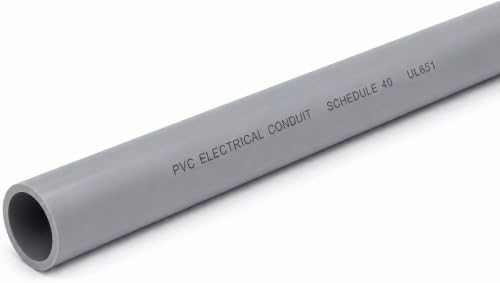
1 inch Schedule 40 PVC Electrical Conduit
$17.21
Schedule 40 PVC, sunlight resistant and rated for direct burial, which is the standard raceway for a feeder crossing a driveway or a lawn. The conduit is the cheap part of the job and the part that decides whether the circuit is serviceable in fifteen years.
- Size
- 1 in
- Schedule
- 40
- Burial
- Rated
- Listing
- UL 651
Trade-off PVC needs a deeper trench than rigid metal conduit does, which is more digging per foot.
Check price
Wocloer
3/4 inch Liquid-Tight Flexible Conduit, 25 ft
$26.79
The transition piece. Where the run comes up out of the ground and into the pedestal, a short length of liquid-tight flexible conduit absorbs frost movement and settling that a rigid connection would transfer straight into the enclosure.
- Size
- 3/4 in
- Length
- 25 ft
- Type
- Liquid-tight
- Fittings
- Included
Trade-off Flexible conduit is not a substitute for a proper below-grade raceway, only the last few feet.
Check price
MOKIKUBA
8 ft Copper Bonded Ground Rod with Clamp
$55.00
Only relevant if the job includes a subpanel in a detached structure, which is common when the pedestal is at the end of a long run. A pedestal by itself is not a structure and does not get its own grounding electrode. A detached garage with a subpanel does.
- Length
- 8 ft
- Type
- Copper bonded
- Clamp
- Included
- Needed
- Subpanel only
Trade-off Buying one for a plain pedestal is a wasted 55 dollars and a hole you did not need to dig.
Check priceGeneric
Steel bollard post, 4 inch, concrete fill
Vehicle strike protection. A pedestal in a driveway is standing exactly where a reversing car goes, and a bollard either side turns a destroyed charger and an exposed feeder into a scuffed bumper.
Trade-off Two more holes and two more concrete pours, which is a real addition to a small job.
Check pricePaid links. Prices shown when researched and change without notice.
Who should not buy the ceiling tier
If your pedestal is going on an existing concrete slab under a carport roof, four feet from a wall you could have used, you do not need most of this. There is no trench, no transition at grade, no grounding electrode and probably no bollard, because a post against a wall in a covered space is not in the path of anything. Buy the post, buy the conduit the electrician specifies for the short exposed run, and stop.
Do not buy the ground rod for a plain pedestal. A pedestal is a mounting post, not a separate structure, and its equipment grounding conductor comes back to the panel with the feeder. A grounding electrode belongs to a detached structure with a subpanel in it. Installing one at a pedestal because it feels safer accomplishes nothing and creates a hole in your lawn.
How we chose these pedestals
We did not test any of these pedestals in person and we do not claim to. Nothing here was assembled in a driveway by us, nothing was loaded, and no post was left out through a winter to see what happened.
The picks come from published specifications, listed safety certifications where the product carries one, and verified owner reviews read in volume. Pedestals are an unusual category on this site because most of them are not electrical devices at all, so certification applies to the parts that are: the receptacle enclosure is ETL listed, the PVC conduit is UL 651 compliant and rated for burial, and the in-use cover meets the extra-duty requirement. A post is judged on steel, finish and geometry instead.
The filters that actually separated these four were mounting compatibility, base type and weather cover. Compatibility first, because a pedestal that does not match your charger's hole pattern is scrap. Base type second: a flanged base can be anchored to concrete, and a spike cannot be anchored to anything. Cover third, judged against where the post will stand rather than as a general virtue, since a roof on a pedestal under a carport is money spent on nothing.
Owner reviews are most useful here on a narrow question: whether the steel gauge is heavy enough that the post does not flex when you pull the cable out of the holster. That complaint is visible in review volume on the thinner products even though individual reviews are unreliable.
Prices were accurate when researched and change without notice. Where a product has no verified Amazon listing it appears as a search link rather than a direct one, which is deliberate: a fabricated product link is worse than no link.
Buying tips: what to settle before you order
Measure the hole pattern, not the charger
Chargers are mounted through a back plate, and back plates differ by manufacturer in width, height and hole spacing. A pedestal listing that says universal usually means it has a slotted plate with a range of positions, which is good, but you still need your charger's dimensions to know whether it falls inside that range. Get the mounting template out of the installation manual before you order the post.
Set the height from the charge port, not from the post
Aim to put the docked connector roughly 42 to 48 inches off the ground. That gives a gentle downward arc to a charge port on almost every vehicle, keeps the cable off wet ground, and stops the cable weight pulling sideways on the connector. Then check the geometry against the car you actually own, because a port on the front wing and a port on the rear quarter want the post in different places entirely.
Assume the pedestal will be hit
A post in a driveway is standing where a reversing car goes, and unlike a wall it has no visual mass behind it. Two bollards either side, or a wheel stop set so the bumper cannot reach, is the cheapest insurance in this project. A struck pedestal is not just a broken charger: it is a bent conduit at grade with conductors in it, which turns a 400 dollar accident into an electrician visit.
Decide the receptacle question before the trench, not after
Hardwired and plug-in need different things at the top of the post and sometimes different conductor arrangements below it, and changing your mind after the concrete has set is expensive. Hardwired is the better outdoor answer for durability. Plug-in is the better answer if you rent, if you may move, or if you want the unit indoors over winter.
Price the trench before you price the post
The pedestal is 3 to 5 percent of this project. Trenching, raceway, conductor and the concrete base dominate, and a run to a detached location typically lands between 2,500 and 6,500 dollars installed. Price the whole job before you fall in love with a particular post, and get two written quotes, because trenching prices vary more between contractors than any other line on an EV charging invoice.
Where to go next
A pedestal charger lives outdoors, so the enclosure rating on the charger itself now matters more than anything on this page: start with the outdoor charger roundup and with outdoor EV charger installation. If the pedestal is a long way from the house, the electrical problem is a feeder problem, and detached garage EV charger covers feeder sizing and the separate grounding rules. And if you have not yet confirmed the panel can carry the circuit at all, have that load calculation done before anybody quotes you for a trench.
Common questions
Do I need a pedestal or can I mount the charger on a wall?
Mount it on a wall if any wall is within reach of the cable and the charge port. A pedestal solves a geometry problem, not a weather problem: detached carport parking, a driveway with no structure beside it, or a garage where the panel is on the opposite side from the car. A wall mount is cheaper, more sheltered, harder to hit with a car and does not need a concrete base, so it wins whenever it is possible.
How deep does the trench to a pedestal have to be?
It depends on the wiring method. As a planning figure, rigid metal conduit can be as shallow as 6 inches, an approved raceway such as Schedule 40 PVC wants 18 inches, and direct-buried cable with no raceway wants 24 inches. Under a residential driveway the figure is 18 inches from the finished surface. Local amendments change these numbers and the trench is inspected, so the electrician sets the depth rather than the internet.
How tall should an EV charger pedestal be?
Aim to put the connector holster roughly 42 to 48 inches off the ground, which is why most pedestals land between 48 and 60 inches overall. That height lets the cable hang in a gentle arc down to a charge port rather than kinking over the top of the post or coiling on wet ground. Too low and the cable drags; too high and the weight of the cable pulls sideways on the connector every time you dock it.
Does a pedestal need its own ground rod?
Not on its own. A pedestal is a mounting post, not a separate structure, and the equipment grounding conductor that runs with the feeder from the panel is what grounds the charger. A grounding electrode enters the picture when the job includes a subpanel in a detached structure such as a garage or a barn, which is a different and larger project. Your electrician determines which of those two you have.
Can I set a pedestal in the ground without concrete?
Some pedestals are sold with spike or auger anchors that go straight into soil, and they will stand up. Whether they stay plumb through a few freeze and thaw cycles is another question, and a post that leans puts steady sideways load on the conduit entering it. A concrete base with anchor bolts and a below-grade conduit stub is the version that is still straight in ten years.
Will a pedestal void my charger warranty?
Mounting a charger on a post is normal and manufacturers generally allow it, since the pedestal is just a vertical surface. The things that do cause warranty problems are unrelated to the post: cutting or extending the supply whip, using an extension cable on the output, or mounting a unit rated for sheltered locations somewhere it takes direct rain. Check the enclosure rating in the manual before you buy an unroofed pedestal.
Getting your own panel and load numbers ready for an electrician? The EV Home Charging Install Planner is the paid version of these pages: 8 printable worksheets you fill in with your own numbers, plus the full PDF, $29.
How this page was researched
Specifications come from manufacturer documentation, listed safety certifications and verified owner reviews. We do not perform hands-on product testing and never claim to. Figures are researched planning information, not professional electrical advice. Last reviewed 2026-08-17.