Volkswagen ID.4: the right home charging setup
Short answer
The Volkswagen ID.4 has a 11 kW onboard AC charger, so the right home setup is a 48 amp charger on a 60 amp circuit. That adds about 35 miles of range per hour and takes roughly 4.7 hours to go from 20 to 80 percent on the 77 kWh pack. Anything faster than 48 amps is power this car cannot accept.
The single number that decides your home charging setup for a Volkswagen ID.4 is not on the wall, it is in the car: the onboard AC charger, rated at 11 kW on the version described here. That component converts alternating current from your house into direct current for the battery, and it is a hard ceiling. Feed it more and it takes exactly 11 kW anyway. So the right circuit is a 48 amp charger on a 60 amp breaker, and the money you might have spent going bigger is better spent on cable length, enclosure quality or a shorter run.
An 11 kW onboard charger means a 48 amp circuit is essentially fully used and a 40 amp circuit gives up about a mile of range per hour. That is a small enough gap that the decision comes down to whether you are opening the wall anyway.
Top pick for the Volkswagen ID.4
Best charger for the Volkswagen ID.4
EMPORIA
Emporia Level 2 EV Charger, 48A J1772
$449.00
A 48 amp hardwired station that delivers the full 11 kW this car accepts, with a 25 foot cable, real energy reporting and scheduling, at roughly half the price of the premium brands at the same output.
- Output
- 11.5 kW
- Delivered here
- 11 kW
- Circuit
- 60 A
- Connector
- J1772
- Cable
- 25 ft
- Install
- Hardwired
Paid link. Price shown when researched.
How fast the Volkswagen ID.4 charges at each circuit size
Below is what each realistic home charging setup delivers to this specific car. The delivered column is the smaller of what the charger can supply and what the car can accept, which is the whole point of the table. Note where the numbers stop improving: that row is the size worth paying for, and every row below it is the size worth avoiding.
| Setup | Breaker | Delivered | Miles per hour | 20 to 80 percent | Near full charge | Verdict |
|---|---|---|---|---|---|---|
| Level 1, 120 V | Existing 15 A outlet | 1.4 kW | 4 mi | 36.7 h | 55.0 h | Fully used by the car. |
| 240 V, 16 A | 20 A | 3.8 kW | 12 mi | 13.5 h | 20.3 h | Fully used by the car. |
| 240 V, 24 A | 30 A | 5.8 kW | 19 mi | 8.9 h | 13.3 h | Fully used by the car. |
| 240 V, 32 A | 40 A | 7.7 kW | 25 mi | 6.7 h | 10.0 h | Fully used by the car. |
| 240 V, 40 A | 50 A | 9.6 kW | 31 mi | 5.3 h | 8.0 h | Fully used by the car. |
| 240 V, 48 A | 60 A | 11.0 kW | 35 mi | 4.7 h | 7.0 h | Wasted. The car accepts 11 kW. |
Read that table the way an electrician would. The 48 amp row is where this car stops improving, so a 60 amp circuit is the largest one that returns anything. Below it, the 40 amp row gives up 4 miles per hour against the recommendation and the 32 amp row gives up 10. Across a nine hour overnight window those gaps are 36 and 90 miles, which matters if you routinely arrive home nearly empty and does not matter at all if you plug in with half a pack left.
The onboard charger accepts 11 kW, so a 60 amp circuit delivers 11 and a 50 amp circuit delivers 9.6. At 3.2 miles per kWh that is 35 miles per hour against 31. Both comfortably replace a normal day, and the larger circuit only matters on a long one.
The circuit this car actually needs
A 48 amp continuous load requires a 60 amp breaker, because the National Electrical Code sizes a circuit serving a continuous load at 125 percent of that load. Turn the rule around and a 60 amp breaker supports 48 amps of continuous draw, which is why a NEMA 14-50 receptacle is always paired with a 40 amp charger and never a 50 amp one. On a short residential run that circuit typically uses 6 AWG copper, though the conductor is sized against your actual installation and a long run is decided by voltage drop rather than by ampacity.
| Item | For a Volkswagen ID.4 | Why |
|---|---|---|
| Charger output | 48 A, 11.5 kW | Matches the 11 kW onboard charger with nothing left on the table |
| Breaker | 60 A two-pole | 125 percent continuous load rule applied to 48 amps |
| Typical copper | 6 AWG | Short residential run at a 75 degree Celsius terminal rating |
| Connection | Hardwired | Above 40 amps continuous, hardwiring is the normal and usually the required answer |
| Connector on the car | CCS1 | Standard J1772 AC connector, which nearly every home charger uses |
| Buildout to follow | hardwired 48 amp buildout | Every line item priced and linked, $2,466 as listed |
Whether that circuit fits your house is a separate question from whether it suits your car, and it is the one that decides your budget. Run the numbers through the panel load calculator before you buy anything. If the service is tight, the two ways out are a smaller charger, which costs this car 10 miles per hour at 32 amps, or a load management device that pauses charging when the house draws heavily, which costs nothing in speed on a normal night.
Connector: what plugs into a Volkswagen ID.4
CCS1 inlet with a J1772 AC connector, so standard wall units plug in directly with no adapter. Straightforward, and it keeps your hardware options wide.
The J1772 side of this is simple, and the only complication is Tesla equipment. The one worth owning is the Lectron NACS to J1772 Adapter for Wall Connectors at around $169.99. Check the certification rather than the price: an adapter carries the full charging current across a connection you make and break daily, and that is not a place to save fifteen dollars. The full argument, in both directions, is in NACS vs J1772 and the shortlist is in the adapter roundup.
What it costs to charge a Volkswagen ID.4 at home
A full charge of the 77 kWh pack costs about $14.12 at the US average residential rate of 16.5 cents per kWh, which works out at 5.7 cents per mile at this car's 3.2 miles per kWh. Those figures include roughly ten percent for charging losses, because the energy your meter records is always more than the energy that reaches the battery. Ignoring that loss is the most common way online charging cost figures come out ten percent too cheap.
| Electricity rate | Cents per kWh | Full charge | Cents per mile | 12,000 miles a year |
|---|---|---|---|---|
| Low, around Utah or Washington | 11.5 | $9.84 | 4.0 | $479 |
| US average | 16.5 | $14.12 | 5.7 | $688 |
| High, around New York | 24.0 | $20.53 | 8.3 | $1000 |
| Very high, around California | 31.8 | $27.21 | 11.0 | $1325 |
Against a 28 mpg petrol car at $3.40 a gallon, 12,000 miles costs about $1457 in fuel. At the national average electricity rate the Volkswagen ID.4 costs $688, a difference of about $769 a year. That number is the honest basis for the payback conversation, because it is what actually pays back a $2,466 installation, and it is also why a time-of-use rate matters more than most people expect: moving every charge into an off-peak window can move the cents-per-mile figure by a third without changing anything about the hardware. Work yours out with the charging cost calculator and the time-of-use savings calculator.
Chargers worth buying for a Volkswagen ID.4
Every unit below can charge this car. The difference between them is not speed, because the car's 11 kW ceiling flattens the top of the range. The difference is enclosure, cable length, connector, whether it plugs in or is wired in, and whether it reports what it used.
Three tiers for the Volkswagen ID.4
Starter, buy once and ceiling. All three deliver at least the 9.6 kW this car can use.
Grizzl-E
Grizzl-E Smart 40A
$250.00
A 40 amp metal-cased unit that gives up about 1.9 kW against a 48 amp station and saves you the hardwired install. On a plug-in 14-50 circuit this is the cheapest sensible route to real Level 2.
- Output
- 9.6 kW
- Circuit
- 50 A
- Case
- Metal
- Install
- Plug-in
Trade-off Gives up roughly 4 miles per hour against the 48 amp circuit.
Check price EMPORIA
Emporia Level 2 EV Charger, 48A J1772
$449.00
The pick. Hardwired 48 amps, which is exactly the output this car can absorb, with a 25 foot cable and energy reporting good enough to audit a utility bill.
- Output
- 11.5 kW
- Delivered
- 11 kW
- Circuit
- 60 A
- Cable
- 25 ft
Trade-off Hardwired, so it stays with the house.
Check price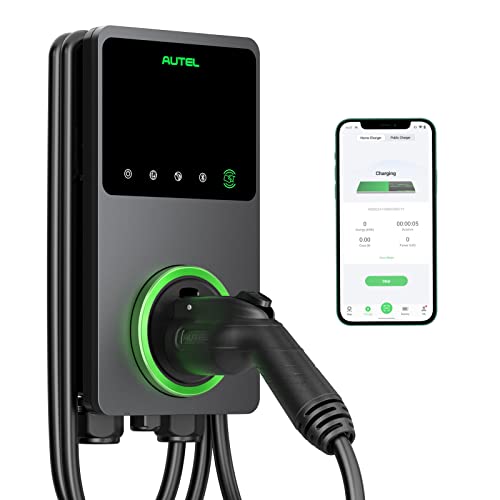
Autel
Autel MaxiCharger 50A Hardwired, 25 ft
$529.00
A 50 amp hardwired station with a 25 foot cold-flexible cable and a well-supported app, for people who want the premium build.
- Output
- 11.5 kW
- Circuit
- 60 A
- Cable
- 25 ft
- Install
- Hardwired
Trade-off Roughly eighty dollars more than the pick for the same delivered power.
Check pricePaid links. Prices shown when researched and change without notice.
The ID.4 is a car where the plug-in install ages well. The onboard limit is high enough that a 40 amp circuit is not obviously undersized, and if a faster car replaces it later, a 50 amp circuit can often be upgraded to 60 without replacing the conductor if the original run used conduit rather than cable.
Cable length matters more than amperage here
The specification owners regret is almost never output. It is reach. A 16 foot cable sounds generous until the charge port is on the far side of the car from the wall, or the garage is used for storage, or you back in on some nights and pull in on others. A 25 foot cable removes that problem permanently for about twenty dollars more than an 18 foot one, and it is the single upgrade most likely to make you happier with the installation five years from now. The options are compared in the long cable roundup, and where the cable lives when it is not in use is covered in the cable management roundup.
Mounting position deserves the same thought. Measure from the intended charger location to the car's inlet along the path the cable will actually take, including the sag, not in a straight line across the garage. Then add the height of the mount. The rules of thumb are in charger placement in a garage, and if the unit is going on an exterior wall, the enclosure rating rather than the output is the specification that decides how long it lasts.
What the installation costs, and what to plan for
The charger is usually the smallest line on the invoice. A straightforward 60 amp circuit with the panel on the same garage wall is commonly quoted at 450 to 900 dollars in labour, a 30 to 50 foot run through finished walls at 900 to 1,600, and a detached garage with trenching at 2,500 to 6,500. The complete priced list for this car's recommended setup is the hardwired 48 amp buildout, which comes to $2,466 including labour, permit and inspection.
Two things save real money and both happen before the electrician arrives. The first is finding out whether your panel has capacity, because a service upgrade is a 3,000 to 7,000 dollar item and a load management device is a fraction of that. The second is checking your local rebates and tax credits before you buy, since several programmes require pre-approval and will not pay retroactively. Estimate the whole job with the installation cost calculator.
How these figures were researched
Pack capacity, onboard charger rating, range and connector type come from published manufacturer specifications and EPA ratings for the variant described here, Pro RWD. We do not test vehicles and never claim to. Capacity, onboard charger rating and efficiency all vary by trim, model year, wheel choice and software version, and usable capacity is always smaller than the gross figure a brochure quotes. An 11 kW onboard charger, so a 48 amp unit is fully used and a 40 amp unit gives up roughly a mile of range per hour.
Charging times assume 90 percent combined charger and onboard conversion efficiency, applied consistently across this site so figures on different pages agree with each other. Real charging is slower in cold weather, slower at very high states of charge, and slower when the car is conditioning the battery. Treat every number here as a planning figure and confirm against your own window sticker and owner's manual before spending money on a circuit.
Where to go next
If the circuit is settled and you want the shopping list, the hardwired 48 amp buildout prices the whole job line by line. If you are still deciding on output, 32A vs 40A vs 48A puts the three realistic sizes side by side, and the EV battery capacity chart shows how this car compares with everything else on onboard charger limit. To check the panel first, start with the panel load calculator and how a load calculation actually works.
Common questions
What size circuit does a Volkswagen ID.4 need?
A 60 amp two-pole circuit feeding a 48 amp charger. The Volkswagen ID.4 has a 11 kW onboard AC charger, so 48 amps at 240 volts is the point where the wall unit and the car are matched. EV charging is a continuous load, so the breaker is sized at 125 percent of the charger output, which is why 48 amps of charging needs 60 amps of breaker. A licensed electrician must confirm the sizing for your installation.
How long does a Volkswagen ID.4 take to charge at home?
On a 48 amp charger, roughly 4.7 hours from 20 to 80 percent and about 7.0 hours for a near-empty to near-full charge of the 77 kWh pack. On a standard 120 volt outlet the same 20 to 80 percent charge takes about 36.7 hours, which is why Level 1 works for short commutes and stops working the moment you have a long day.
How many miles per hour does a Volkswagen ID.4 gain while charging?
About 35 miles of range per hour at 48 amps, 31 miles per hour at 40 amps, and roughly 4 miles per hour on a 120 volt household outlet. Those figures use 3.2 miles per kWh, which is the EPA-derived efficiency for the trim described here. Cold weather, high speeds and hills all reduce it.
Would a bigger charger charge a Volkswagen ID.4 faster?
No. The Volkswagen ID.4 caps at 11 kW on AC, so anything beyond 48 amps is power the car will not draw. A 48 amp station and an 80 amp station charge this car at exactly the same speed. The only things a larger circuit buys you are headroom for a future vehicle and, on a short run, a modest amount of futureproofing for very little extra cost.
What does it cost to charge a Volkswagen ID.4 at home?
About $14.12 for a full charge of the 77 kWh pack at the US average residential rate of 16.5 cents per kWh, including roughly ten percent charging losses. That is 5.7 cents per mile, or around $688 a year at 12,000 miles. A 28 mpg petrol car at $3.40 a gallon costs about $1457 over the same distance.
Does the Volkswagen ID.4 need a special charger?
No. The car takes the standard J1772 AC connector that nearly every home charger in North America ships with. If you want to use a Tesla Wall Connector, you need a NACS to J1772 adapter, and only some Tesla equipment supports non-Tesla vehicles.
Getting your own panel and load numbers ready for an electrician? The EV Home Charging Install Planner is the paid version of these pages: 8 printable worksheets you fill in with your own numbers, plus the full PDF, $29.
How this page was researched
Specifications come from manufacturer documentation, listed safety certifications and verified owner reviews. We do not perform hands-on product testing and never claim to. Figures are researched planning information, not professional electrical advice. Last reviewed 2026-08-17.